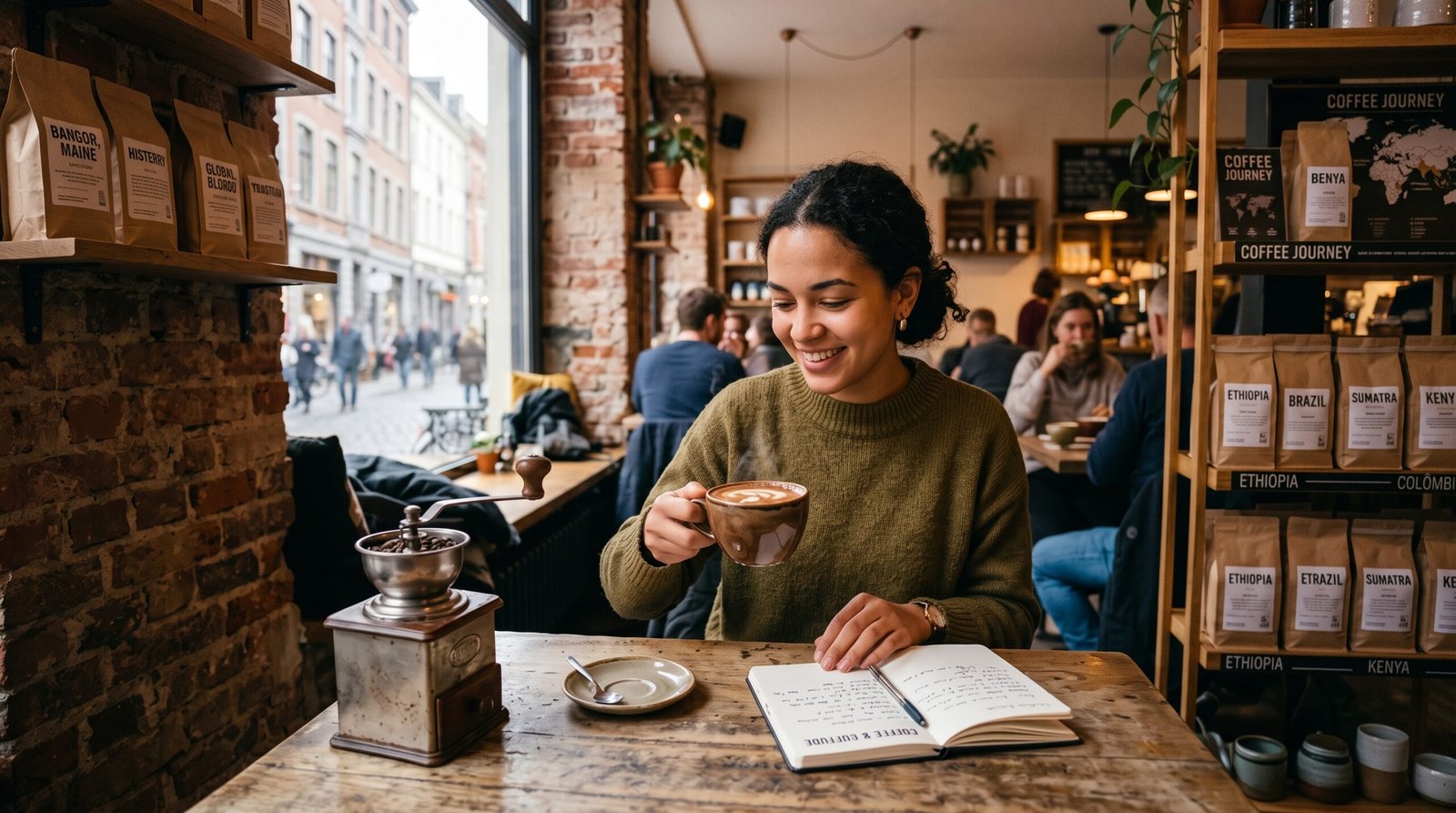
Coffee facts can be surprisingly fascinating, especially when you look beyond the familiar morning cup. Coffee is much more than a morning drink.
For millions of people, it is part of a daily routine, a reason to pause during a busy afternoon, a social ritual, and sometimes the first thing they think about when they wake up.
But how much do we really know about the drink sitting in our favorite mug?
Coffee has a surprisingly long history, a complex journey from fruit to roasted bean, and a cultural influence that reaches far beyond the breakfast table. It has traveled across continents, inspired coffeehouses, shaped trade, and become part of everyday life in countries with very different traditions.
There is also an interesting detail behind the claim that coffee is one of the world’s most consumed beverages. Water is, of course, in a category of its own because it is essential for life. When comparisons exclude water, coffee is frequently described as one of the world’s most widely consumed beverages, although exact rankings depend on how consumption is measured.
In the United States, the latest National Coffee Data Trends report released in 2026 found that nearly 195 million American adults drink coffee each week, making it America’s most popular beverage.
So why has coffee become such an important part of everyday life?
Here are seven fascinating coffee facts that reveal more about the drink behind the daily ritual.
These coffee facts reveal just how much history and science can be found behind an everyday cup.
1. Coffee Begins as a Fruit, Not a Bean
One of the simplest facts about coffee is also one of the easiest to forget: coffee beans are actually seeds.
They grow inside the fruit of the coffee plant, commonly called a coffee cherry because of its appearance when ripe.
The fruit usually contains seeds surrounded by layers of pulp and other protective material. After the cherries are harvested, the fruit is processed to remove those layers, leaving the seeds that eventually become the coffee beans we recognize.
Those green coffee seeds do not look much like the dark brown beans in a bag at the grocery store.
The transformation happens during roasting.
Roasting changes the color, aroma, flavor, and physical characteristics of the coffee. The green seeds gradually become the familiar brown beans, while hundreds of chemical reactions contribute to the flavors and aromas associated with roasted coffee.
This means that when you drink a cup of coffee, you are enjoying the result of a surprisingly long process.
A coffee plant produces fruit.
The fruit is harvested.
The seeds are separated and processed.
The green coffee is dried and prepared for export.
Then the beans are roasted, ground, brewed, and finally poured into your cup.
That journey is one reason coffee can be so interesting to explore.
2. Coffee Has Deep Roots in Ethiopia
Coffee’s early history is closely connected with Ethiopia, where Coffea arabica is believed to have originated.
The exact history of coffee’s discovery is difficult to document, and one of the most famous stories is the legend of Kaldi, a goat herder who supposedly noticed that his goats became unusually energetic after eating berries from a particular plant.
It is important to treat the Kaldi story as a legend rather than a confirmed historical event.
What is much better established is coffee’s long connection to Ethiopia and its eventual spread into the Arabian Peninsula, where coffee cultivation and preparation developed into an important cultural tradition.
From there, coffee gradually traveled farther.
Its history illustrates how a plant native to one region can become part of everyday life across the world.
The story also helps explain why coffee has such a rich cultural identity. It was not simply discovered, packaged, and immediately sold everywhere. Its development involved farming, trade, preparation methods, social customs, and centuries of cultural exchange.
One of the most interesting coffee facts is how the drink became part of social life.
3. Coffeehouses Helped Turn Coffee Into a Social Experience
Coffee became more than a beverage as coffeehouses began appearing in parts of the Middle East and later Europe.
These establishments provided places where people could meet, talk, exchange ideas, conduct business, and spend time together.
That social role helped give coffee a meaning beyond its taste or caffeine content.
A cup of coffee could become part of a conversation.
It could accompany a business meeting.
It could provide a reason to leave the house and spend time with other people.
Eventually, coffeehouses became associated with intellectual and social life in many cities.
The tradition has not disappeared.
Modern coffee shops may look very different from historical coffeehouses, but many still serve a similar purpose. People meet friends, work on laptops, read, study, talk, or simply sit quietly with a cup of coffee.
The surroundings may have changed, but the basic idea remains surprisingly familiar.
Coffee can create a reason to pause and connect.

4. Caffeine Works by Interacting With Adenosine
The energizing effect of coffee is closely connected to caffeine.
Caffeine is a naturally occurring compound found in coffee and several other plants. One reason it can make people feel more alert is the way it interacts with adenosine, a chemical involved in the regulation of sleepiness and wakefulness.
As the day goes on, adenosine builds up in the brain and contributes to feelings of tiredness.
Caffeine can temporarily block adenosine receptors, reducing the perception of sleepiness.
That does not mean caffeine removes the body’s need for sleep.
Instead, it can temporarily change how tired we feel.
This is one reason people often reach for coffee when they need to stay alert during a busy morning, a long workday, or an afternoon slump.
However, caffeine affects people differently.
Some people are particularly sensitive to it, while others can drink coffee later in the day without noticing much effect on their sleep.
The amount of caffeine can also vary considerably depending on the coffee, serving size, brewing method, and preparation.
So a large cup of one coffee may not contain the same amount of caffeine as a similarly sized cup of another.
Another fascinating coffee fact involves the two coffee species found in commercial production.
5. Arabica and Robusta Are the Two Main Coffee Species You Hear About
Walk into a coffee shop or browse a bag of coffee beans and you will often see the words Arabica and Robusta.
They refer to two important coffee species used commercially.
Arabica coffee is generally associated with a more complex and often smoother flavor profile, while Robusta is known for its stronger, more bitter character and generally higher caffeine content.
The plants also differ in how they grow and the conditions they tolerate.
Arabica tends to prefer higher elevations and particular growing conditions, while Robusta is generally more tolerant of heat and certain environmental stresses.
These differences influence how coffee is produced and how the final drink tastes.
But there is no simple rule that says one is always better than the other.
Coffee flavor depends on many factors, including the species or variety, growing environment, processing method, roasting, grinding, and brewing.
That is why two cups of coffee can taste dramatically different even though both begin with coffee seeds.
The world of coffee is much more diverse than the word “coffee” might suggest.
6. Coffee Tastes Different Around the World
Coffee is consumed in an enormous variety of ways.
In some places, people prefer a small, concentrated espresso.
In others, coffee may be brewed slowly and served in a larger cup.
Milk, sugar, spices, chocolate, foam, ice, and other ingredients can completely change the experience.
Even the social meaning of coffee varies between cultures.
For some people, coffee is primarily a morning routine.
For others, it is something enjoyed with friends or family.
In some cultures, offering coffee to a guest is an important part of hospitality.
The methods may be different, but the underlying idea is often similar: coffee creates a moment.
It can be a few quiet minutes alone before the day begins.
It can be a conversation with a friend.
It can be a break from work.
It can be part of a meal.
It can even become a personal ritual that helps divide one part of the day from another.
This cultural variety is one of the reasons coffee has remained so fascinating.
There is no single “correct” way to enjoy it.
These coffee facts also show that coffee is much more than something we simply drink.

7. Coffee Has Become a Global Industry and a Daily Ritual
Coffee’s journey does not end when the beans reach a grocery store or café.
Behind every cup is a global supply chain involving farmers, processors, exporters, importers, roasters, distributors, cafés, grocery stores, and consumers.
Coffee production supports communities in many countries, while demand comes from consumers around the world.
The United States provides a useful example of just how deeply coffee has become integrated into everyday life.
According to the National Coffee Association‘s Spring 2026 data, 66% of American adults reported drinking coffee in the previous day, while 73% had consumed coffee during the previous week. The organization also reported that 82% of past-day coffee drinkers prepared their coffee at home.
These numbers help explain why coffee is not simply a niche beverage.
For many people, it is part of the structure of the day.
Morning coffee can signal the beginning of work.
An afternoon cup can become a small break.
Meeting someone for coffee can provide an easy way to socialize.
And making coffee at home can become a familiar ritual that requires only a few minutes but provides a sense of comfort and routine.
That combination of history, culture, economics, flavor, and daily habit has helped coffee become one of the world’s most recognizable beverages.
After learning these coffee facts, your next cup may feel a little different.
More Coffee Facts About a Drink That Became a Daily Ritual
The story of coffee is fascinating because it combines so many different parts of human life.
It begins with a fruit growing on a plant.
It continues through farming, processing, roasting, and brewing.
Then it becomes something social.
A cup of coffee can be part of a conversation, a business meeting, a quiet morning, a family tradition, or a moment of solitude.
Its popularity is also remarkably adaptable.
People can enjoy coffee black or with milk.
Hot or iced.
Strong or mild.
Prepared with a simple drip machine, a French press, an espresso machine, a pour-over brewer, or another method.
There is no single experience that defines coffee.
And perhaps that flexibility is part of its appeal.
A Few More Things to Notice About Your Next Cup
The next time you make coffee, take a moment to think about what is actually in your cup.
Those dark roasted beans began as seeds inside fruit.
Their journey may have involved several countries and many people before reaching your kitchen.
The flavor you experience was influenced by the plant variety, growing environment, processing, roasting, grinding, and brewing method.
And the alertness you feel after drinking it is connected to caffeine’s interaction with adenosine receptors in your brain.
Something that feels completely ordinary can become surprisingly interesting when you look a little closer.
Taken together, these coffee facts show why coffee continues to fascinate people around the world.
If you enjoy learning the stories behind everyday foods and drinks, you may also enjoy exploring some of the other fascinating food and lifestyle articles here at Bloom Magnolia.
Coffee Is Part of Everyday Life
Coffee has traveled an extraordinary distance from its origins in Ethiopia to kitchens, cafés, offices, and restaurants around the world.
These coffee facts are a reminder that an everyday drink can carry centuries of history and cultural tradition.
It has become a global product, a social tradition, a source of income for millions of people, and a familiar part of everyday routines.
Yet the basic experience remains simple.
You make a cup.
You take a sip.
You pause for a moment.
Sometimes that is all you need.
The next time you drink your favorite coffee, remember that you are enjoying much more than a caffeinated beverage. You are participating in a tradition shaped by agriculture, history, science, trade, culture, and countless individual rituals.
That may be the most fascinating coffee fact of all: something so ordinary can have such an extraordinary story.



Post Comment