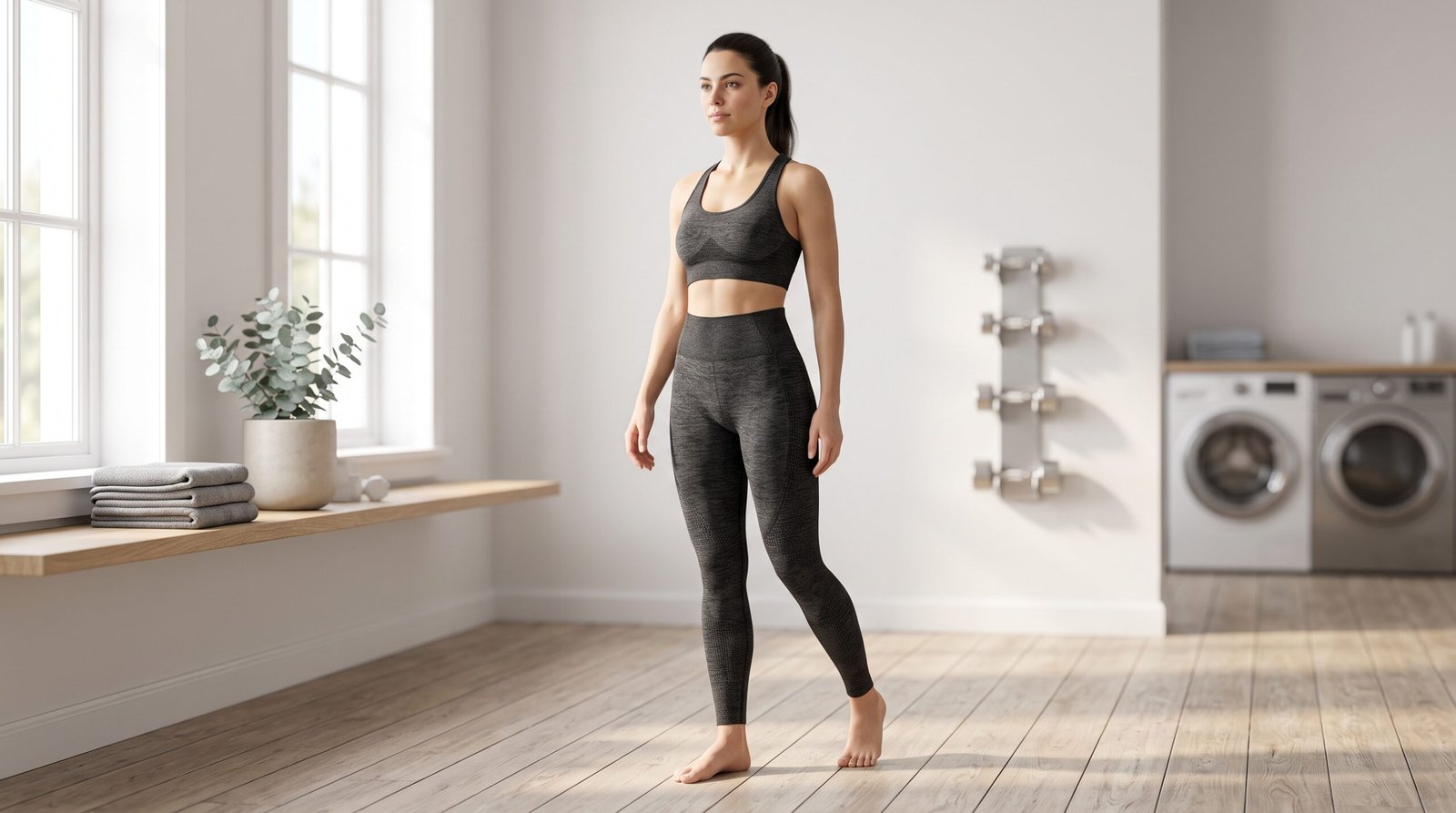
If you’ve ever pulled on a pair of leggings, looked in the mirror, and suddenly noticed more dimpling on your thighs, you may have wondered: do leggings cause cellulite?
The short answer is no.
Leggings do not create cellulite. Cellulite develops beneath the skin and is related to the way fat, connective tissue, skin structure, genetics, hormones, age, and muscle tone interact. It is extremely common, especially among women, and even people who are very fit can have it.
What leggings can do is change how the surface of your skin looks temporarily.
A pair that is very tight, highly stretched, shiny, thin, or made from a fabric that doesn’t lie smoothly against the body may make existing dimples more noticeable. Another pair, with a comfortable fit and more opaque matte fabric, may make the same skin look smoother.
That’s an important distinction.
You don’t need to get rid of your favorite leggings because you have cellulite. Instead, understanding how fit, fabric, color, and styling affect what you see in the mirror can help you choose leggings that make you feel more comfortable and confident.
Do Leggings Cause Cellulite?
No. Wearing leggings does not cause cellulite.
Cellulite forms because bands of connective tissue beneath the skin interact with the underlying fat and pull the skin downward in certain areas. At the same time, fat pushes upward toward the surface, creating the familiar dimpled or puckered appearance.
Genetics and hormones play important roles, and cellulite becomes more common with age as skin loses some elasticity. Body composition and muscle tone can also influence how noticeable it appears. Mayo Clinic explains that cellulite is related to factors including connective tissue, genetics, hormones, weight, muscle tone, and aging.
This is why cellulite isn’t simply a result of being overweight.
People with very different body types can have it.
The appearance may also change from day to day depending on lighting, posture, movement, hydration, skin tension, and what you’re wearing.
So if your thighs look smoother in one pair of leggings and more textured in another, that doesn’t mean one pair caused cellulite.
The clothing may simply be changing how the existing texture is displayed.
Why Can Leggings Make Cellulite Look More Noticeable?
If leggings don’t cause cellulite, why can your legs sometimes look more dimpled when you wear them?
The answer is largely visual.
When a stretchy fabric is pulled tightly across the body, it follows the natural contours of the skin. Instead of hiding every curve and indentation, a thin or highly stretched material may emphasize them.
A shiny fabric can also reflect light unevenly, making variations in the skin’s surface easier to see.
By contrast, a thicker, opaque, matte fabric can create a more visually uniform surface.
This doesn’t change your skin.
It simply changes the way light and fabric interact with it.
If you’re wondering do leggings cause cellulite simply because your legs look different in one pair of pants, the important distinction is between causing cellulite and making existing cellulite more visible.
That’s why the same pair of legs can look completely different in different clothing.
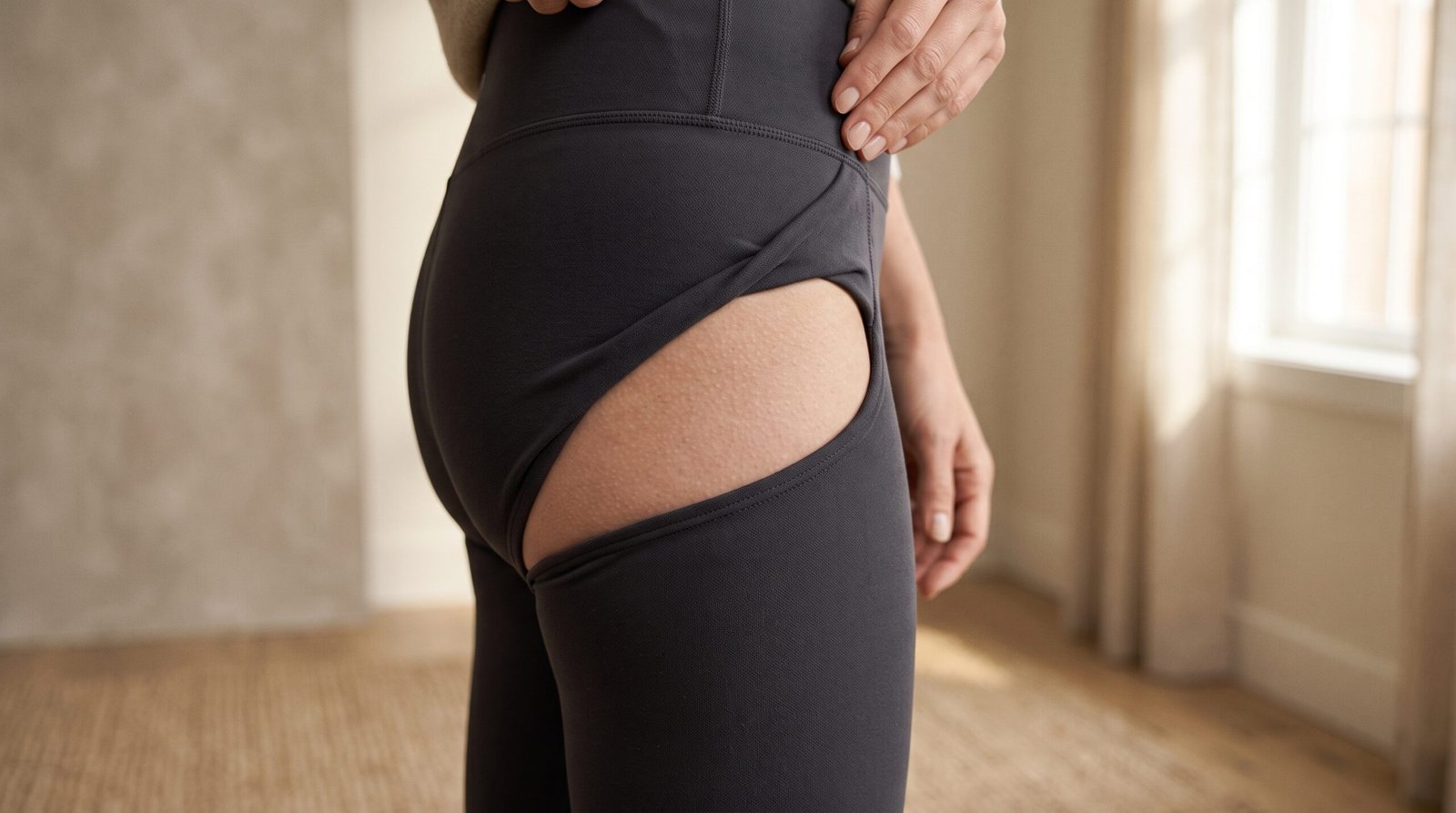
Tight Leggings Aren’t Necessarily Better
It’s easy to assume that tighter leggings will automatically create a smoother appearance.
That’s not always true.
When fabric is stretched beyond its most comfortable fit, it can emphasize every contour underneath it. Extremely tight clothing can also create visible pressure lines around the waist, thighs, or knees.
This is another reason the answer to “do leggings cause cellulite?” is different from the question of whether leggings can make cellulite easier to see.
A better approach is to choose leggings that feel supportive without digging into your skin.
For everyday wear, soft high-waisted leggings with a comfortable stretch can be another option if you prefer a supportive fit without choosing an overly restrictive style.
Look for a waistband that stays in place without creating a pronounced indentation and fabric that stretches comfortably without becoming overly thin.
You should be able to move, sit, walk, and exercise without constantly adjusting the garment.
In other words, fit matters more than simply choosing the tightest pair available.
How Fabric Affects the Appearance of Cellulite
The fabric itself can make a noticeable difference in how your legs look.
You don’t necessarily need an expensive “anti-cellulite” fabric. In many cases, the characteristics of the garment are more useful than the marketing label.
When shopping for leggings, consider:
- Opacity: Fabric that remains opaque when stretched is less likely to reveal every contour underneath.
- Thickness: A fabric with enough body can create a more even visual appearance.
- Matte finish: Matte materials generally reflect less light than very shiny fabrics.
- Stretch: Good stretch should allow movement without making the fabric look excessively thin.
- Construction: Smooth, well-made fabric can sit more evenly against the skin.
- Fit: The garment should stretch comfortably rather than feeling like it is fighting against your body.
You don’t need to follow a specific fabric formula.
Instead, put the leggings on and look at them while standing, walking, bending, and sitting.
A fabric that looks smooth while you’re standing may become significantly more transparent or stretched when you move.
Matte Leggings vs. Shiny Leggings
If your goal is to make cellulite less noticeable, a matte finish is often a simple styling choice.
Shiny fabrics reflect light, which can emphasize differences in texture depending on the lighting.
Matte fabrics tend to create a softer, more even visual effect.
This doesn’t mean shiny leggings are bad.
If you love them, wear them.
But if you’ve ever looked at your legs under bright lighting and felt that a glossy pair of leggings seemed to highlight every little detail, switching to a matte pair may make you feel more comfortable.
Sometimes the solution is simply changing the way light interacts with the fabric.
Are Dark Leggings Better for Hiding Cellulite?
Dark colors are often popular when people want a more streamlined appearance, and there is a simple visual reason for that.
Black, charcoal, navy, and other deeper shades can create a more uniform appearance than very light or highly reflective colors.
Patterns can also change how the eye perceives texture.
A subtle pattern may make small variations in the surface less visually obvious than a completely solid, light-colored fabric.
However, there is no universal “best” color for cellulite.
The most important thing is choosing something you feel good wearing.
If you love bright leggings, there’s no reason to stop wearing them because you have cellulite.
How to Choose Leggings That Look Smoother
If you’re shopping specifically for leggings that make your legs look more even, start with the basics.
1. Look for Opaque Fabric
Try the squat test before buying or wearing a new pair.
Bend, stretch, and move under normal lighting.
If the fabric becomes noticeably transparent or extremely thin when stretched, it may also reveal more of the natural texture underneath.
If you’re looking for more coverage, you can also consider high-waisted leggings with opaque, smoothing fabric as an everyday option.
2. Choose a Comfortable Fit
Avoid leggings that create deep lines where the waistband or leg openings meet your skin.
The goal isn’t maximum compression.
The goal is a comfortable fit that stays in place while allowing you to move naturally.
If certain leggings also make your skin feel irritated or itchy, you may also want to read our guide on why leggings itch and how to fix it.
3. Consider a Matte Finish
If you prefer a more understated appearance, matte fabrics are worth trying.
They tend to reflect less light and can create a softer overall look.
4. Pay Attention to Seams
Seams placed across certain areas can draw attention to specific parts of the legs.
If you’re looking for a smoother visual effect, try styles with clean lines and minimal details across the areas where you feel most self-conscious.
5. Try the Leggings in Natural Movement
Don’t judge a pair only while standing still.
Walk around.
Sit down.
Bend your knees.
Squat.
Look at the fabric from different angles.
The right pair should still feel comfortable and look opaque as the fabric stretches.
If you’re asking do leggings cause cellulite because a particular pair makes your thighs look more textured, the fabric and fit may simply be emphasizing cellulite that was already there.
Can Compression Leggings Reduce Cellulite?
Compression leggings are often marketed with claims about improving circulation, shaping the body, or reducing the appearance of cellulite.
It’s important to separate temporary appearance changes from actually treating cellulite.
Compression clothing may temporarily create a smoother or more sculpted appearance while you’re wearing it, but that doesn’t mean it has removed the underlying cellulite.
Cellulite involves structures beneath the skin, including connective tissue and fat, so ordinary clothing cannot permanently eliminate it. Medical sources also emphasize that cellulite treatments generally aim to reduce its appearance rather than permanently erase it.
The American Academy of Dermatology also notes that cellulite treatments can make the appearance of cellulite less noticeable, but results vary.
If a pair of compression leggings makes you feel more supported or confident, there’s nothing wrong with wearing them.
Just don’t feel pressured to buy expensive leggings based on promises that they will permanently “fix” cellulite.
What About Anti-Cellulite Leggings?
You’ve probably seen leggings marketed as “anti-cellulite,” “cellulite reducing,” or designed with special fabrics or textures.
Be cautious about what those claims actually mean.
A garment can temporarily change the appearance of the skin by compressing it, smoothing the fabric over the body, or creating a different visual effect.
That’s very different from changing the underlying structure that produces cellulite.
The American Academy of Dermatology notes that cellulite is different from ordinary body fat and that even many treatments marketed for cellulite have varying levels of evidence. Some dermatologist-performed treatments can reduce its appearance, but results vary and may not be permanent.
So if you’re considering an “anti-cellulite” garment, think of it as clothing rather than a medical treatment.
Choose it because you like the fit, comfort, support, and appearance—not because you expect it to permanently change your skin.
If you searched for do leggings cause cellulite because you noticed more dimpling after putting on a particular pair, remember that appearance and cause are two different things.
Can Exercise Make Cellulite Less Noticeable?
Exercise cannot guarantee that cellulite will disappear.
However, regular physical activity can improve muscle tone and may make the appearance of cellulite less noticeable for some people. Mayo Clinic notes that activities that tone muscles may help improve the appearance of dimpled skin, while also supporting overall physical activity and circulation.
Activities such as:
- Walking
- Cycling
- Running
- Resistance training
- Squats and other lower-body exercises
- Swimming
- Pilates
can all be useful forms of regular movement.
The goal shouldn’t be to exercise because you need to “earn” smoother legs.
Exercise can be valuable because it supports strength, mobility, cardiovascular health, and overall well-being.
If your muscles become stronger and more developed, the contours of your body may change too.
Can Losing Weight Get Rid of Cellulite?
Not necessarily.
This is another common misconception.
If someone carries excess weight, losing weight may make cellulite less noticeable in some cases. But cellulite is not simply a problem caused by excess body fat.
People who are lean can have cellulite too. Genetics, skin structure, connective tissue, hormones, age, and muscle tone all play a role.
In some situations, significant weight loss can even leave looser skin, which may make cellulite appear more noticeable.
So losing weight should not be presented as a guaranteed cellulite solution.
If you want to change your weight, focus on overall health rather than trying to reach a specific appearance standard.
Simple Styling Tricks to Make Cellulite Less Noticeable
If your goal is simply to feel more confident in leggings, clothing choices can make a surprisingly big difference.
Choose Darker, Matte Colors
Black, navy, charcoal, and other darker shades can create a more uniform visual effect.
Try Subtle Patterns
A small print can break up the visual focus on individual skin contours.
Look for Longer Tops
A longer sweater, tunic, sweatshirt, or lightweight jacket can provide additional coverage around the hips and upper thighs if that makes you feel more comfortable.
Choose Structured Fabrics
Leggings with enough structure to remain opaque while stretched can create a smoother appearance than very thin fabrics.
Avoid Excessively Shiny Materials
If you find that shiny fabric emphasizes texture under certain lighting, a matte finish may be a better choice.
None of these suggestions are about hiding something that is wrong with your body.
They’re simply styling options.
You get to decide what makes you feel comfortable.
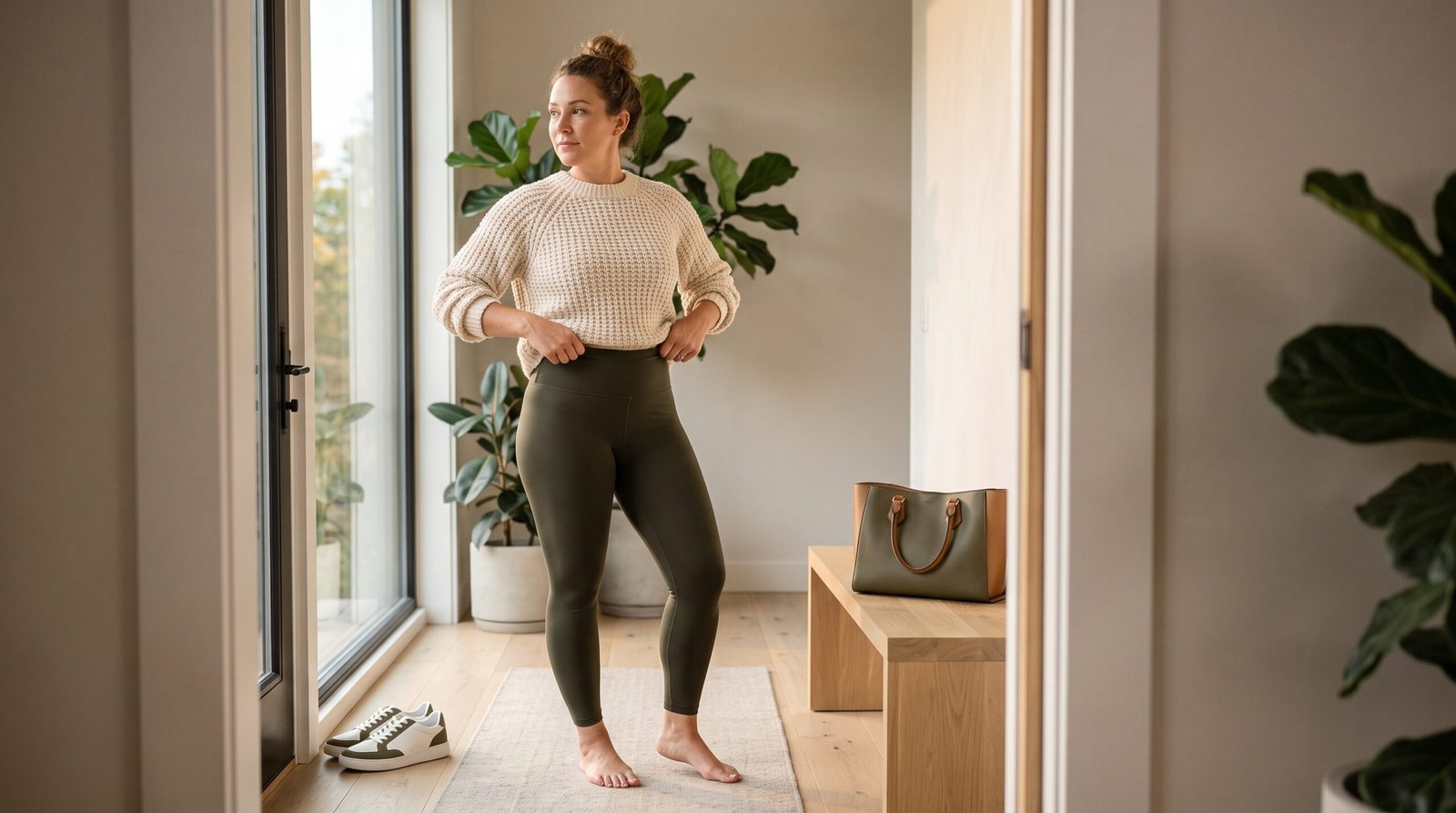
Why Your Cellulite May Look Different From One Day to Another
It can be confusing to notice cellulite one day and barely see it the next.
But your skin doesn’t necessarily have to change dramatically for its appearance to look different.
Lighting can make a huge difference.
So can posture, muscle contraction, skin tension, hydration, and the clothing you’re wearing.
A bathroom mirror under bright overhead lighting may show details that aren’t visible in softer natural light.
That doesn’t mean your cellulite suddenly became worse.
This is also why asking do leggings cause cellulite can be confusing when the appearance changes from one outfit to another.
It means you’re seeing your skin under different conditions.
This is worth remembering before deciding that a particular pair of leggings has somehow changed your body.
Is Cellulite Something You Need to Treat?
No.
Cellulite is considered a cosmetic concern rather than a condition that needs medical treatment. It does not usually cause pain or threaten your health.
You can leave it completely alone.
If you want to make it less noticeable, there are cosmetic and medical options that may help to varying degrees.
The American Academy of Dermatology discusses several professional treatments, including acoustic wave therapy, certain laser procedures, subcision, and other techniques. Results vary, and some treatments require multiple sessions or maintenance.
If you’re considering a professional treatment, talking with a board-certified dermatologist is a much better starting point than relying on marketing claims from a product seller.
What About Cellulite Creams?
Cellulite creams are everywhere, and some contain ingredients such as caffeine or retinol.
Some products may temporarily improve the appearance of the skin, and the AAD notes that certain creams may have modest effects. For example, products containing 0.3% retinol may make cellulite less noticeable in some people by thickening the skin, but results can take months and are not guaranteed.
That is very different from saying a cream can permanently eliminate cellulite.
Be particularly skeptical of products promising dramatic results in a few days.
If you try a topical product, follow the instructions carefully and pay attention to irritation. Some cellulite creams can cause skin reactions, and retinol can be irritating for some people.
Frequently Asked Questions
Do leggings cause cellulite?
No. Leggings do not cause cellulite. They can, however, change how existing cellulite looks by compressing and stretching the skin and altering the way light reflects from the fabric.
Can tight leggings make cellulite worse?
Tight leggings can make cellulite appear more noticeable while you’re wearing them, especially if the fabric becomes highly stretched or creates visible pressure lines. That does not mean the leggings are making the underlying cellulite worse.
What leggings are best for hiding cellulite?
Look for leggings with opaque, sufficiently substantial fabric, a comfortable fit, and preferably a matte finish. Darker colors and subtle patterns can also create a smoother visual effect.
Does compression get rid of cellulite?
No. Compression clothing may temporarily change the appearance of the body while you wear it, but it does not permanently remove the underlying cellulite.
Can exercise reduce the appearance of cellulite?
Regular exercise, particularly activities that build muscle, may make cellulite less noticeable by improving muscle tone and changing body composition. It does not guarantee that cellulite will disappear.
Can skinny people have cellulite?
Yes. Cellulite can occur in people of many body shapes and sizes. Being thin or physically fit does not guarantee that you won’t have cellulite.
Should I avoid leggings if I have cellulite?
Absolutely not.
If you enjoy wearing leggings, keep wearing them.
Choose styles that feel comfortable and give you the amount of coverage and support you prefer. Your choice of clothing should be based on what makes you feel good, not on the idea that cellulite needs to be hidden.
The Bottom Line
So, do leggings cause cellulite?
No.
Leggings don’t create cellulite, and wearing tight clothing doesn’t suddenly change the connective tissue and fat beneath your skin that contribute to its appearance.
What leggings can do is change how cellulite looks temporarily.
So if you’ve been wondering do leggings cause cellulite after noticing more dimpling in a certain outfit, the answer is still no the leggings are affecting how the existing texture appears, not creating cellulite.
A thin, shiny, highly stretched fabric may emphasize texture, while an opaque, matte, comfortable pair may create a smoother visual effect.
If you want your legs to look more even in leggings, focus on practical details: choose a comfortable fit, look for opaque fabric, consider matte finishes, experiment with darker colors or subtle patterns, and choose styles that make you feel confident.
And most importantly, remember that cellulite is incredibly common.
You don’t have to hide it.
You don’t have to treat it.
You don’t have to change your body before you deserve to feel comfortable wearing whatever you like.
If you prefer a smoother looking silhouette, that’s a perfectly reasonable styling preference too.
The goal isn’t to fight your body.
It’s to find clothing that works with it and makes you feel good when you put it on.


Post Comment