Learning the alphabet is an important early step, but that does not mean every child wants to sit down and practice letters. Some children become interested for a few minutes and then want to move on to something else. Others may know some letters but lose interest when activities start feeling too much like school.
If your child is struggling to stay interested, you do not necessarily need more worksheets or longer lessons. Often, the better approach is to make learning more playful, keep activities short, and connect letters to things your child already enjoys.
The good news is that there are many simple alphabet activities for kids that can happen naturally throughout the day.
Why Children Lose Interest in Alphabet Practice
Young children have short attention spans, and their interests can change quickly. A child may happily identify a few letters one day and refuse to practice them the next.
That does not necessarily mean your child is behind or not learning.
The American Academy of Pediatrics recommends making early reading and learning experiences enjoyable rather than forcing children to practice before they are ready. Learning through play can help children stay engaged while developing important early skills.
Instead of asking your child to sit through a long alphabet lesson, try creating short opportunities to interact with letters throughout the day.
Keep Alphabet Activities Short
One of the easiest ways to make alphabet learning more enjoyable is to stop before your child becomes frustrated.
You do not need a 30-minute lesson. Even five or ten minutes can be enough for a simple activity.
If you’re looking for more ways to keep children engaged without screens, you can also try these 15 Fun Screen-Free Activities for Kids to Try at Home.
For example, choose three or four letters and play a quick matching game. The next day, choose different letters.
Short activities can also make children more willing to participate because they know the activity will not last forever.
Simple alphabet activities for kids can be especially helpful when a child is easily distracted or prefers to move from one activity to another.
If your child loses interest after a few minutes, that is okay. You can simply try again later.
Connect Letters to Things Your Child Loves
Letters become more meaningful when children can connect them to familiar things.
If your child loves animals, use animal names to practice letters:
- A for alligator
- B for bear
- C for cat
- D for dog
If your child loves food, toys, vehicles, or favorite characters, use those interests too.
You can say, “Your name starts with M,” or “Look! Your favorite toy starts with T.”
This makes alphabet learning feel less like memorization and more like discovering letters in the child’s everyday world.
Try an Alphabet Scavenger Hunt
An alphabet scavenger hunt is a simple way to get children moving while practicing letter recognition.
Choose one letter and ask your child to find something in the house that begins with that sound.
For example:
Find something that starts with B.
Your child might find a ball, book, blanket, or basket.
You can also change the game by looking for objects that actually contain the letter. For example, ask your child to find the letter A somewhere on a food package, book, sign, or toy.
The goal is not perfection. The goal is helping your child notice that letters are part of the world around them.
Use Pictures to Make Letters More Meaningful
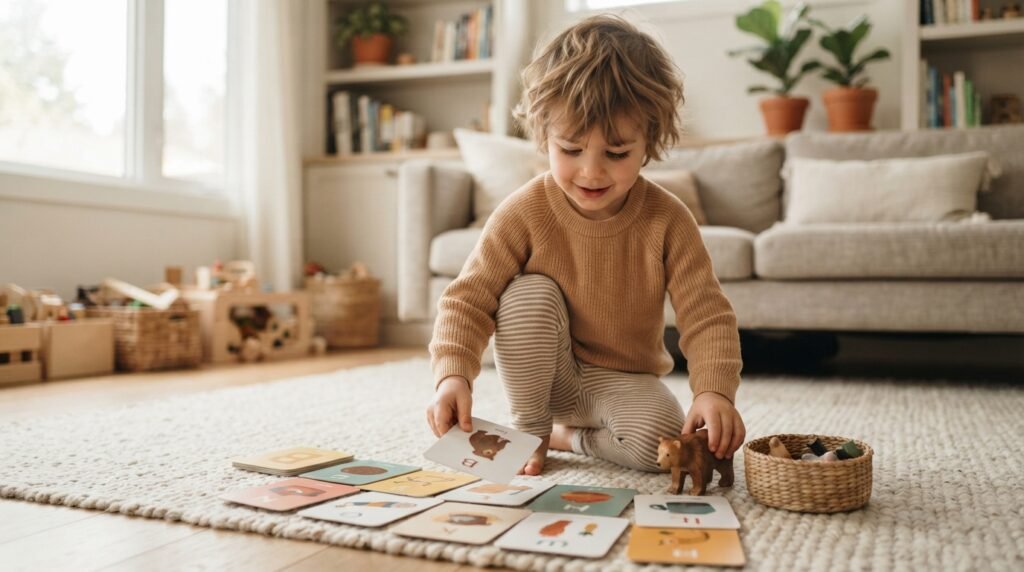
Pictures can help children connect a letter with a word.
Show your child the letter B and a picture of a ball. Say the letter and word together:
“B is for ball.”
Then ask your child to repeat it if they want to.
You can do this with just a few letters at a time instead of trying to review the entire alphabet.
This is especially useful for children who become bored when they only see rows of letters.
Play “Find the Letter”
Write or print several letters and place them around the room.
Call out one letter and let your child find it.
You can make the game easier by using only two or three letters at first. As your child becomes more comfortable, add more.
You can also turn it into a movement game:
“Can you find the letter A and jump next to it?”
Or:
“Touch the letter B, then run to the couch.”
Adding movement can make a simple learning activity feel more like play.
Match Uppercase and Lowercase Letters
Once your child is becoming familiar with letters, try a simple matching game.
Write uppercase letters on one group of cards and lowercase letters on another. Mix them together and ask your child to find the pairs.
You do not need to use all 26 letters at once.
Start with a few familiar pairs, such as:
A — a
B — b
C — c
Then gradually introduce more.
Use Alphabet Activities for Kids With Flash Cards
Alphabet flash cards can be useful when you want a ready-to-use activity without spending time preparing materials.
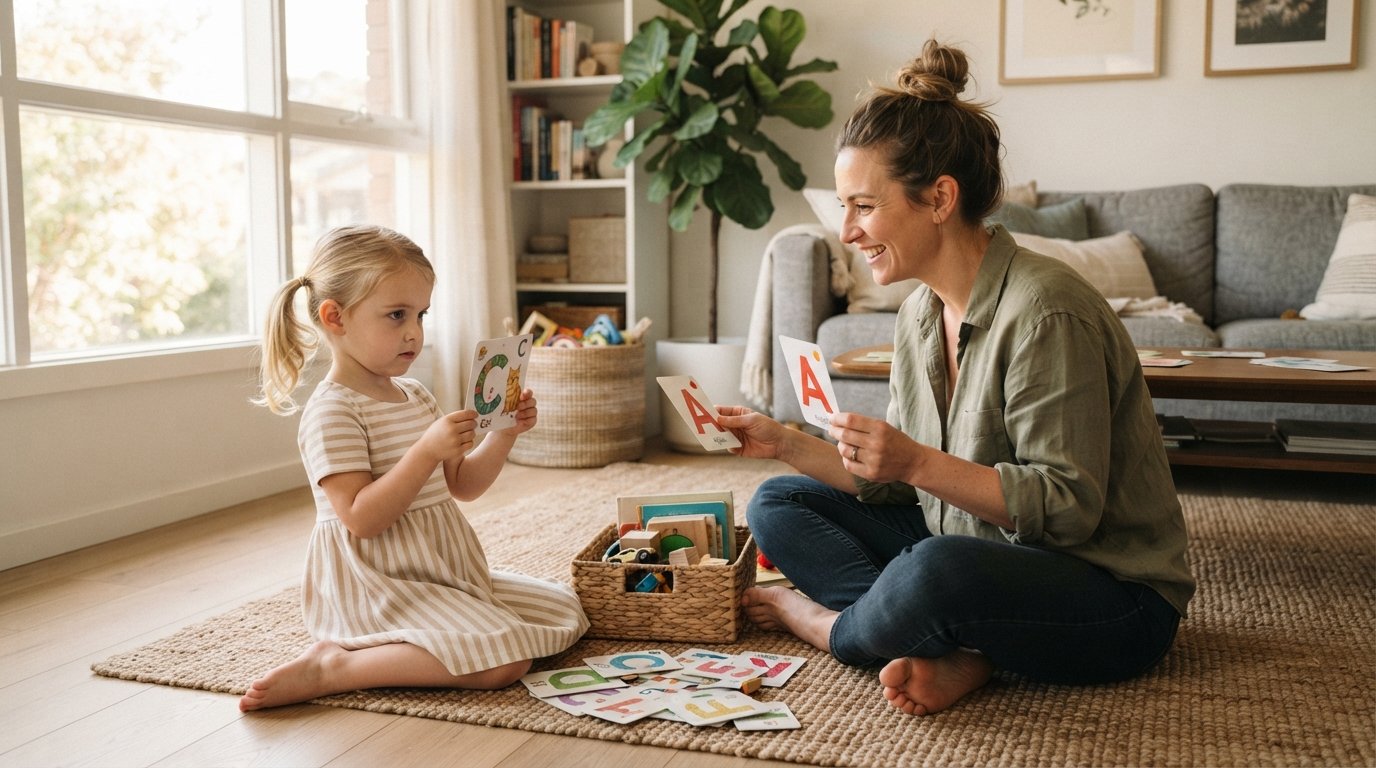
For example, you can show your child one card and ask:
“What letter is this?”
Then turn the question into a game.
“Can you find something that starts with this letter?”
You can also place several cards on the floor and ask your child to find a specific letter.
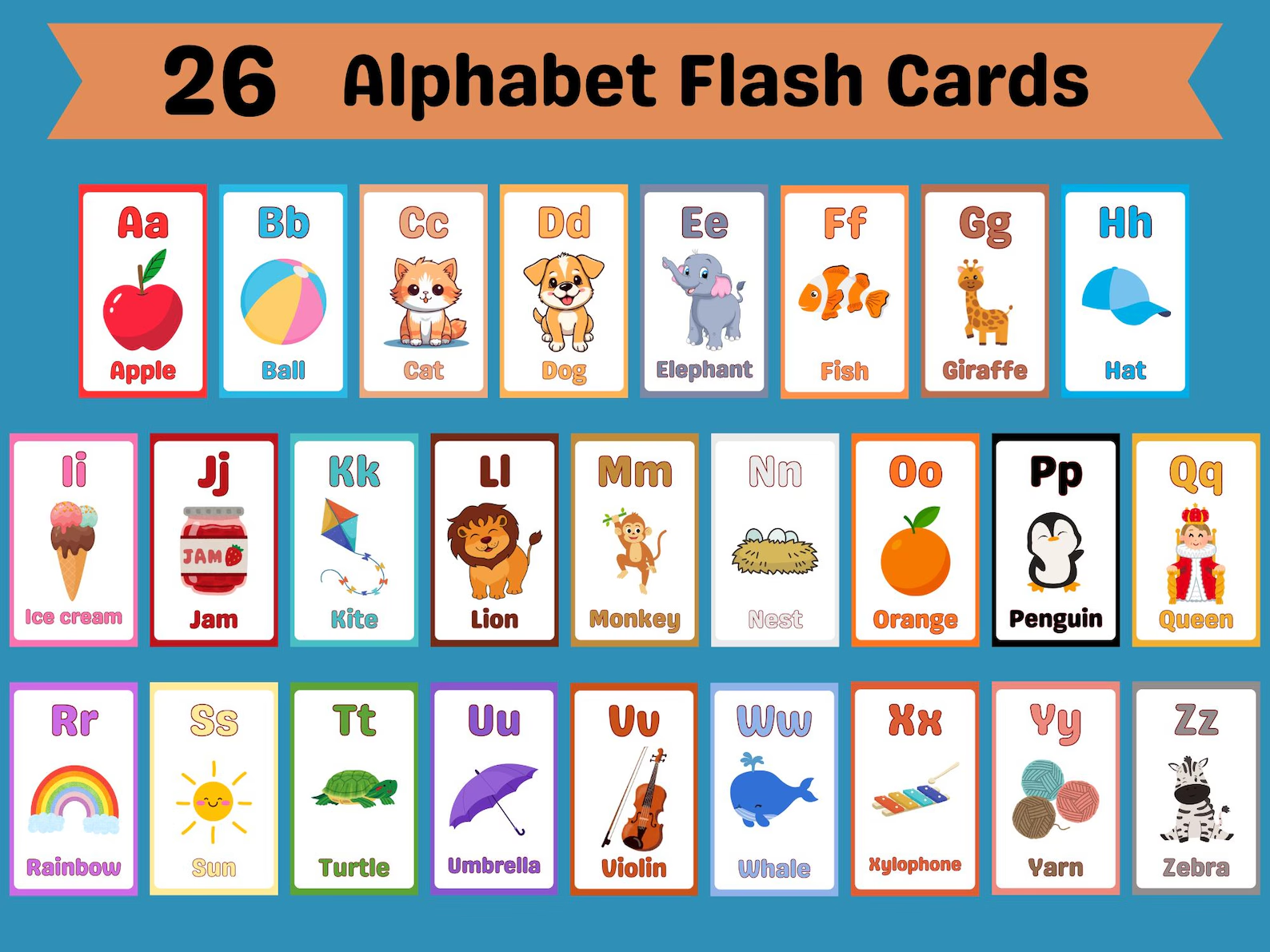
If you want a simple set to keep available for these activities, the 26 ABC Flash Cards from AnaFinnBloom includes letters A–Z with child-friendly illustrations. The digital download includes PDF and PNG versions in 3×5 and 5×7 sizes, so you can print the size that works best for your child.
26 ABC Flash Cards — AnaFinnBloom on Etsy
The cards can be used for matching, letter hunts, identifying beginning sounds, or simply choosing one letter to talk about each day.
Play “What’s Missing?”
Put three or four letter cards in front of your child.
Let your child look at them for a few seconds, then ask them to close their eyes while you remove one.
Ask:
“What’s missing?”
Your child then tries to identify the missing letter.
This game can be especially fun because it feels like a challenge rather than a lesson.
If it is too difficult, use only two or three letters. You can increase the number as your child becomes more confident.
Build Simple Words
When your child recognizes several letters, you can begin putting them together.
Start with familiar words such as:
- CAT
- DOG
- MOM
- DAD
- SUN
You do not need to turn this into a reading lesson. Simply let your child move the letters around and see how they form words.
If your child already knows the letters in their own name, that is an excellent place to begin.
Look for Letters During Everyday Routines
You do not have to schedule a special alphabet activity every day.
Look for letters naturally during normal routines.
At the grocery store, point out letters on food packages. During story time, ask your child to find a particular letter on a page. When you receive mail, look for letters in names and addresses.
You can even make a quick game while driving or walking:
“Can you find the letter S?”
These little moments add up without making your child feel like they are constantly being tested.
Let Your Child Move
Some children simply learn better when they are moving.
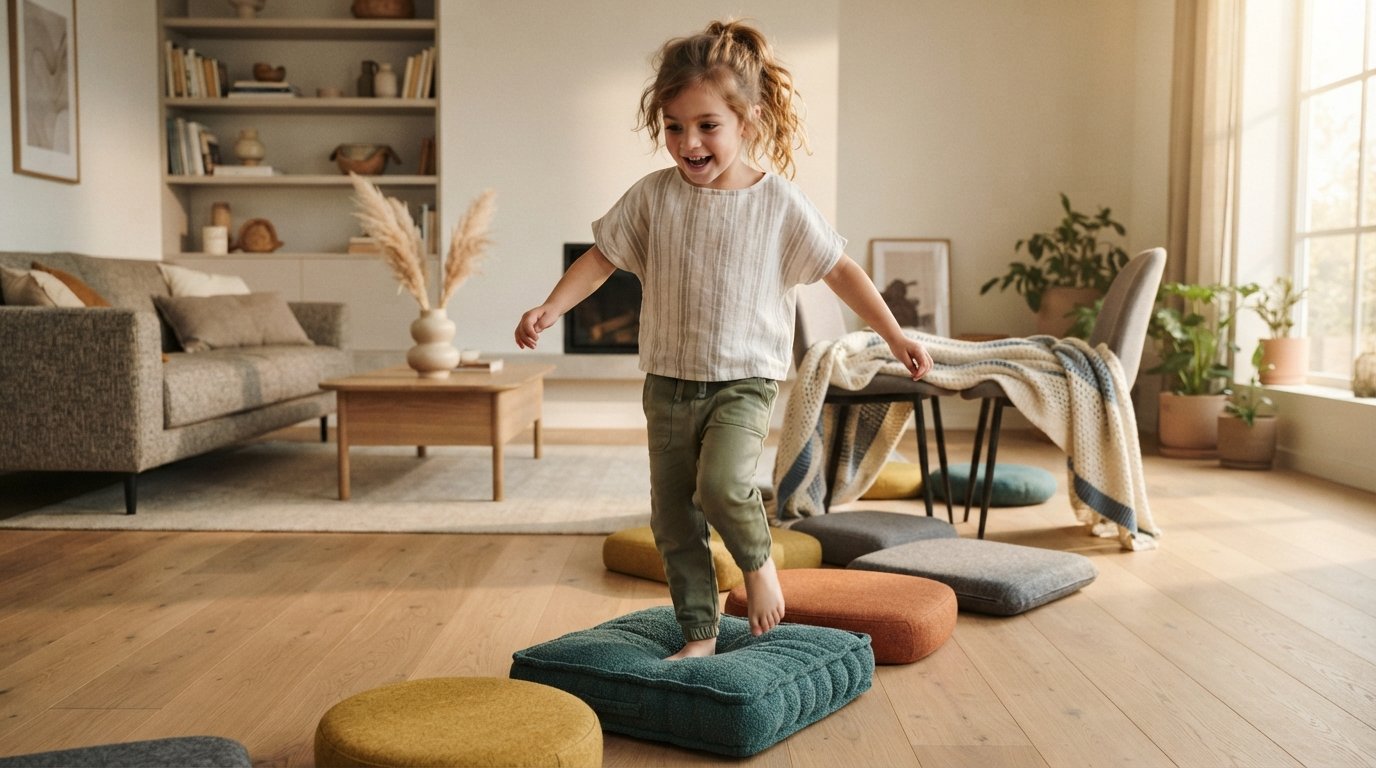
Instead of sitting at a table, put letters on the floor and let your child jump from one to another.
You could say:
“Jump to A!”
Then:
“Jump to M!”
Another option is to tape several letters around the room and have your child walk, hop, or run to the correct one.
This can be particularly helpful for children who become restless during traditional table activities.
Do Not Turn Every Activity Into a Test
It can be tempting to ask:
“What letter is that?”
“What sound does it make?”
“What word starts with it?”
But if every interaction becomes a quiz, your child may begin avoiding the activity.
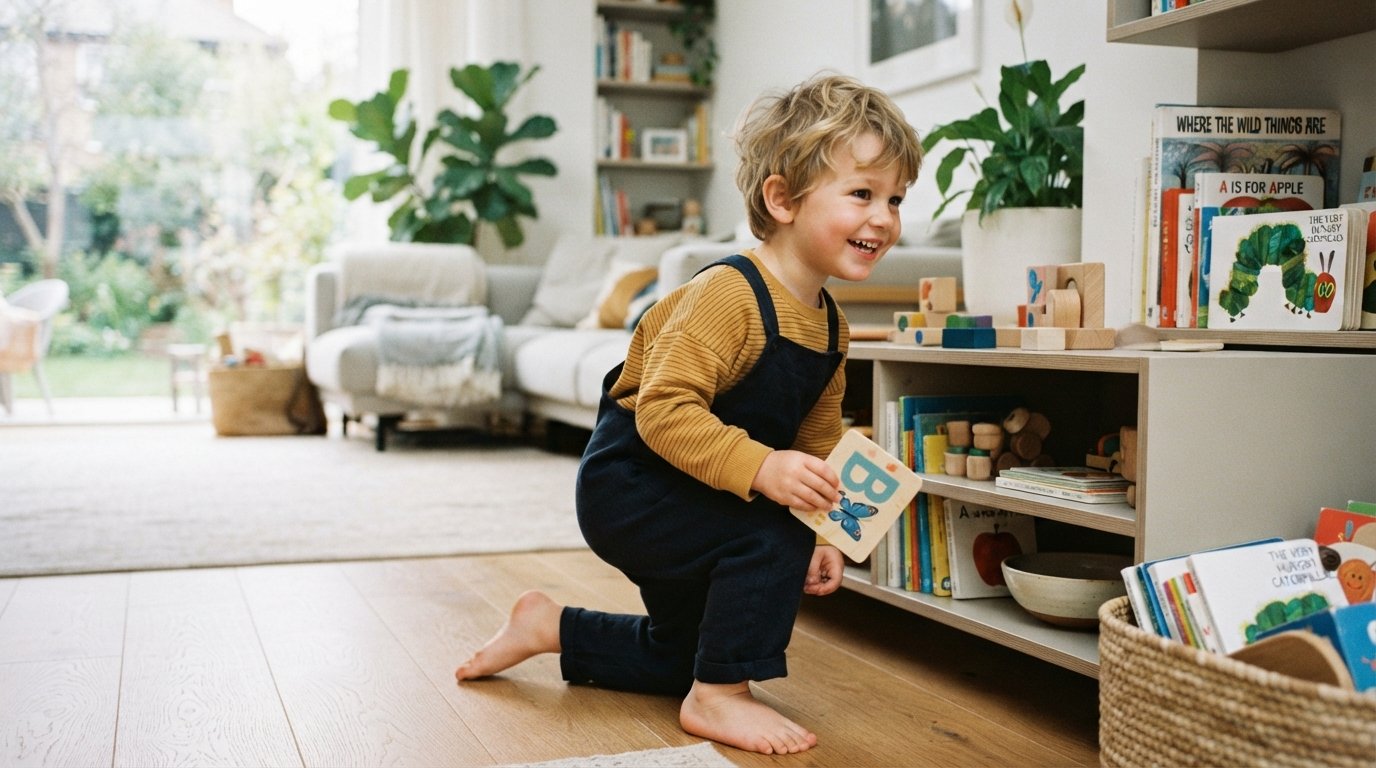
Sometimes it is enough to simply point out a letter.
“That is an M. M is the first letter in Mommy.”
You are still giving your child information without requiring an answer.
Learning can happen even when your child is simply listening and observing.
Follow Your Child’s Interests
If your child suddenly becomes fascinated by dinosaurs, use dinosaur names to practice letters.
If they love trucks, use trucks.
If they are interested in animals, make animal names part of the activity.
The more connected an activity is to something your child already cares about, the easier it may be to hold their attention.
You do not have to follow a rigid alphabet curriculum to create valuable learning experiences at home.
It Is Okay to Stop
Perhaps the most important rule is knowing when to stop.
If your child says they are finished, starts becoming frustrated, or clearly wants to do something else, you can end the activity.
Learning does not have to happen all at once.
A child who enjoys a five-minute alphabet game is likely to have a better experience than a child who is forced to sit through a long lesson.
You can always try again later.
A Simple 10-Minute Alphabet Routine
If you want a predictable routine, try this:
Minutes 1–2: Choose two or three letters.
Minutes 3–5: Play a matching or “find the letter” game.
Minutes 6–8: Connect one letter to a picture or familiar object.
Minutes 9–10: Let your child choose their favorite letter and talk about it.
Then stop.
You do not need to complete every activity every day.
The goal is simply to create positive experiences with letters.
Make Alphabet Learning Feel Like Play
Learning the alphabet does not need to happen at a desk with worksheets and long lessons.
Some of the best alphabet activities for kids can happen while playing, reading, moving around the house, shopping, or talking about things your child already loves.
Keep activities short. Use familiar objects. Let your child move. Turn letters into games. And most importantly, avoid making every moment feel like a test.
When children associate learning with curiosity and enjoyment, they have more opportunities to build confidence while practicing important early skills.
You do not need to make alphabet learning complicated. A few letters, a little creativity, and a playful attitude can be enough to turn an ordinary afternoon into a useful learning opportunity.
A Simple Alphabet Resource for Home Learning
If you want to have alphabet cards ready for quick games and activities at home, you can also use these 26 ABC Flash Cards from AnaFinnBloom.
The printable set includes letters A–Z with colorful, child-friendly illustrations and comes in multiple sizes, making it easy to choose what works best for your child.
You can use the cards for letter recognition, matching games, scavenger hunts, beginning-sound activities, or short alphabet practice.
26 ABC Flash Cards — Educational A–Z Cards
View the ABC Flash Cards on Etsy
Digital download: Your files are available to download after your Etsy payment has been confirmed.
Post Comment