Finding something for kids to do without reaching for a tablet or turning on the TV can feel surprisingly difficult, especially on long afternoons at home.
The good news is that children don’t always need complicated toys, expensive supplies, or elaborate activities. Sometimes, a few simple materials and a little direction are enough to turn an ordinary afternoon into something creative and enjoyable.
If you’re looking for screen-free activities for kids, here are 15 simple ideas you can try at home. Most require supplies you probably already have, and several can be adapted for different ages.
The best screen-free activities for kids are often the simplest ones. They can encourage creativity, movement, imagination, and independence without requiring expensive toys or complicated preparation.
1. Set Up a Coloring Station
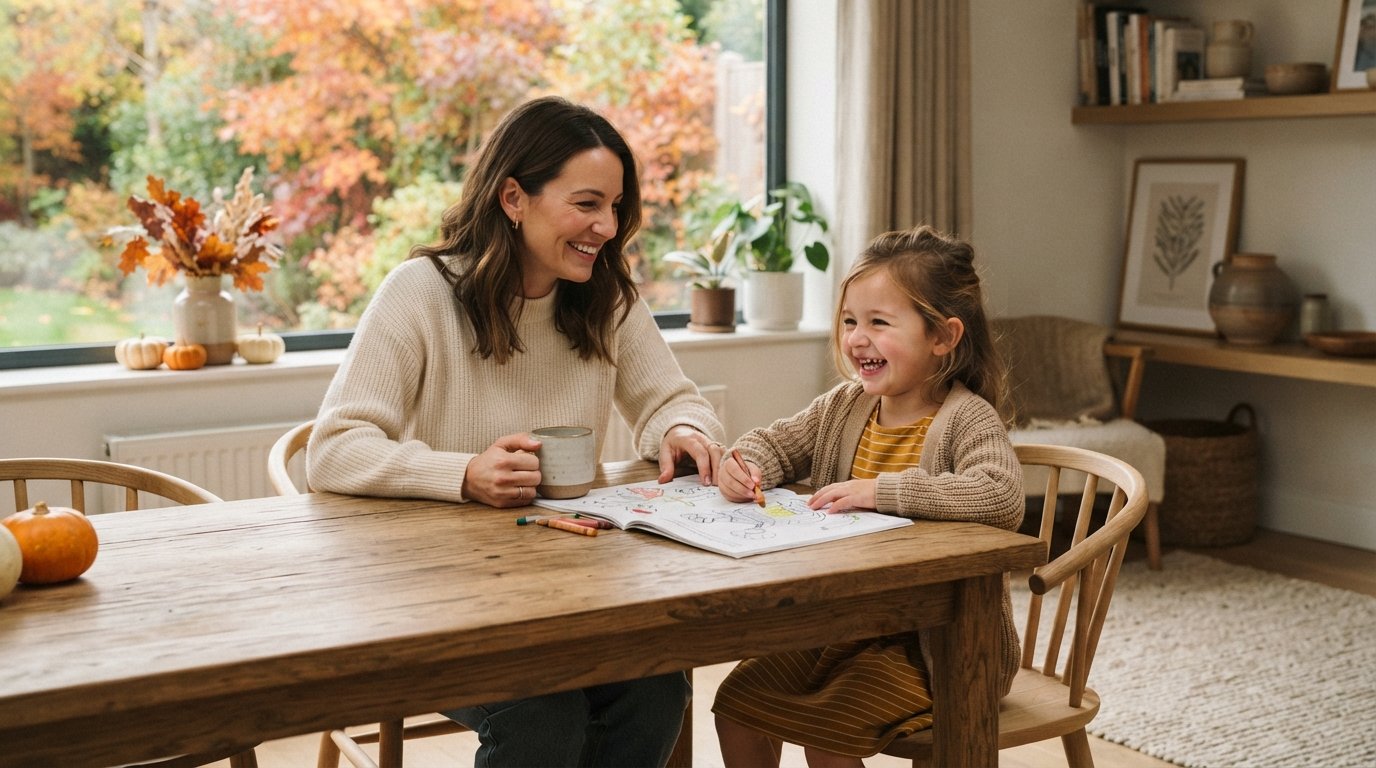
Coloring is one of the easiest screen-free activities because it requires very little preparation.
Put some crayons, colored pencils, or washable markers on the table along with paper or a coloring page. Then let your child choose what they want to create.
For younger children, coloring can help them practice holding and controlling drawing tools. Older children may enjoy adding their own backgrounds, characters, or stories to a picture.
You can also use a printable coloring page when you want something ready to go.
For example, you can offer your child our Free Giraffe Coloring Page for Kids and let them decide whether their giraffe should look realistic or completely imaginative.
2. Create a Cardboard Box Project
Before throwing an empty cardboard box into the recycling bin, see what your child can turn it into.
A larger box can become:
- A pretend house
- A garage
- A store
- A mailbox
- A puppet theater
- An animal shelter
- A spaceship
You don’t need to make the project for them.
Give them the box and a few safe craft supplies and see what they come up with.
Paper, crayons, washable markers, child-safe scissors, and tape can provide plenty of possibilities.
The goal isn’t to create something Pinterest-perfect. The fun comes from deciding what the box will become.
3. Make a Homemade Puzzle
You don’t need a store-bought puzzle to create a simple one at home.
Have your child draw a picture on a piece of paper. When they’re finished, turn the paper over and draw several large puzzle-shaped sections on the back.
Cut along the lines, then mix up the pieces.
Younger children can start with just a few large pieces, while older children can handle a more complicated design.
Another option is to use an old greeting card or a picture from a magazine that would otherwise be discarded.
4. Start a Nature Collection
If you have access to a safe outdoor area, send your child on a small nature hunt.
Depending on the season, they might look for:
- Interesting leaves
- Small rocks
- Pinecones
- Sticks
- Acorns
- Feathers
- Flowers that are already on the ground
Make a simple rule that nothing living should be picked or disturbed.
When your child comes back, they can arrange the items by size, shape, texture, or color.
You can also use the opportunity to talk about what they found and where it came from.
For younger children, simply asking, “Which one is your favorite?” can start a surprisingly long conversation.
5. Have a Reading Picnic
You don’t need to go anywhere to make reading feel different.
Put a blanket on the living-room floor, prepare a simple snack, and choose a few favorite books.
Your child can pretend you’re having a picnic while you read together.
Older children can bring their own books and read independently for part of the time.
Changing the setting can make an ordinary reading session feel like a special activity without requiring much preparation.
The American Academy of Pediatrics encourages parents to make reading together a regular, enjoyable part of family life. See the American Academy of Pediatrics’ tips for helping children enjoy reading aloud.
6. Make a Paper Animal
Give your child a sheet of paper and ask them to create an animal.
They can draw one, cut it out, and decorate it with crayons or colored pencils.
Then ask questions about their creation:
What is its name?
Where does it live?
What does it eat?
Does it have any animal friends?
This can turn a simple craft into a storytelling activity.
Younger children can tell the story while an adult writes down their words. Older children can write the story themselves.
7. Build Something With Household Items
A screen-free afternoon can become a building challenge.
Give your child a collection of safe household materials such as:
- Paper cups
- Cardboard tubes
- Blocks
- Plastic containers
- Craft sticks
- Paper
- Tape
Then give them a challenge.
For example:
“Can you build a tower taller than your favorite stuffed animal?”
Or:
“Can you build a house for one of your toys?”
The activity doesn’t need a complicated set of instructions. Giving children a goal and letting them figure out how to reach it encourages problem-solving and creativity.
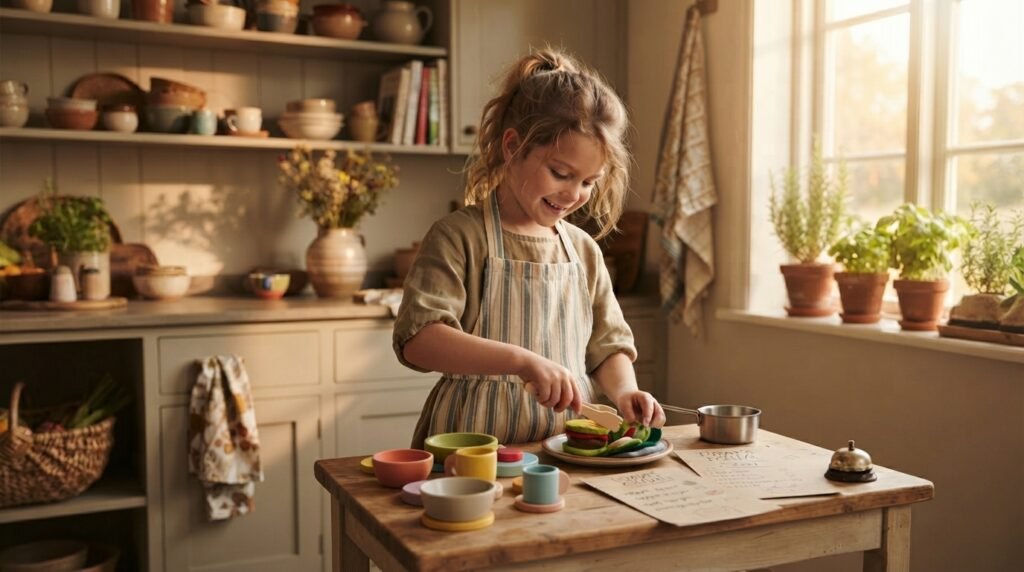
8. Create a Pretend Restaurant
Children often enjoy pretending to be adults.
Set up a small pretend restaurant using toy dishes or safe household items.
Your child can create a menu, decide what the restaurant serves, and pretend to take orders.
You can even give them paper and crayons so they can make a restaurant sign or menu.
For older children, this can become an opportunity to practice writing prices, adding numbers, and making change with pretend money.
The activity can grow naturally depending on your child’s age.
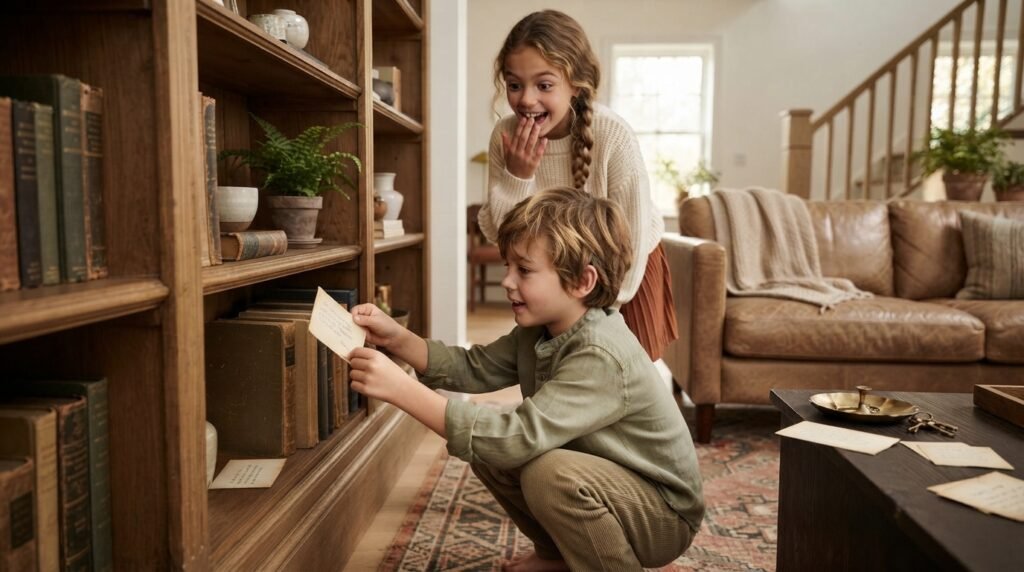
9. Make a Treasure Hunt
A treasure hunt doesn’t need a complicated setup.
Hide a small object somewhere in the house and give your child clues to help them find it.
For younger children, use simple directions such as:
“Look somewhere near where we keep the shoes.”
For older children, create written clues that lead from one location to another.
You can also make the final “treasure” something simple, such as choosing the afternoon snack or picking the next family game.
The anticipation is often more exciting than the prize.
10. Let Them Help With a Real Household Job
Not every useful activity needs to look like a game.
Children can participate in age-appropriate household tasks while spending time with you.
Depending on their age, they might:
- Match clean socks
- Fold simple towels
- Wipe a table
- Organize books
- Put away toys
- Help prepare ingredients
- Water plants
Younger children may need more supervision, while older children can gradually take more responsibility.
Doing something together can also create an opportunity to talk without the distractions of a screen.
11. Make Homemade Play Dough
Homemade play dough can provide a longer creative activity than simply sitting down with a coloring book.
Once the dough is ready, children can make pretend food, animals, flowers, houses, or whatever they imagine.
Cookie cutters, plastic utensils, rolling pins, and other child-safe kitchen tools can add more possibilities.
If you make play dough at home, choose a recipe appropriate for your child’s age and supervise young children, especially because homemade dough is not automatically safe to eat.
12. Have a Drawing Challenge
Give your child a simple drawing prompt and see what they create.
Try:
- Draw a house in the clouds.
- Draw your dream bedroom.
- Draw an animal that doesn’t exist.
- Draw a family of friendly monsters.
- Draw what you think the ocean looks like.
- Draw a garden for butterflies.
Don’t worry about whether the drawing looks realistic.
The point is to give your child an idea to start with and then let their imagination take over.
For older children, you can turn the challenge into a short comic strip with several boxes showing what happens in a story.
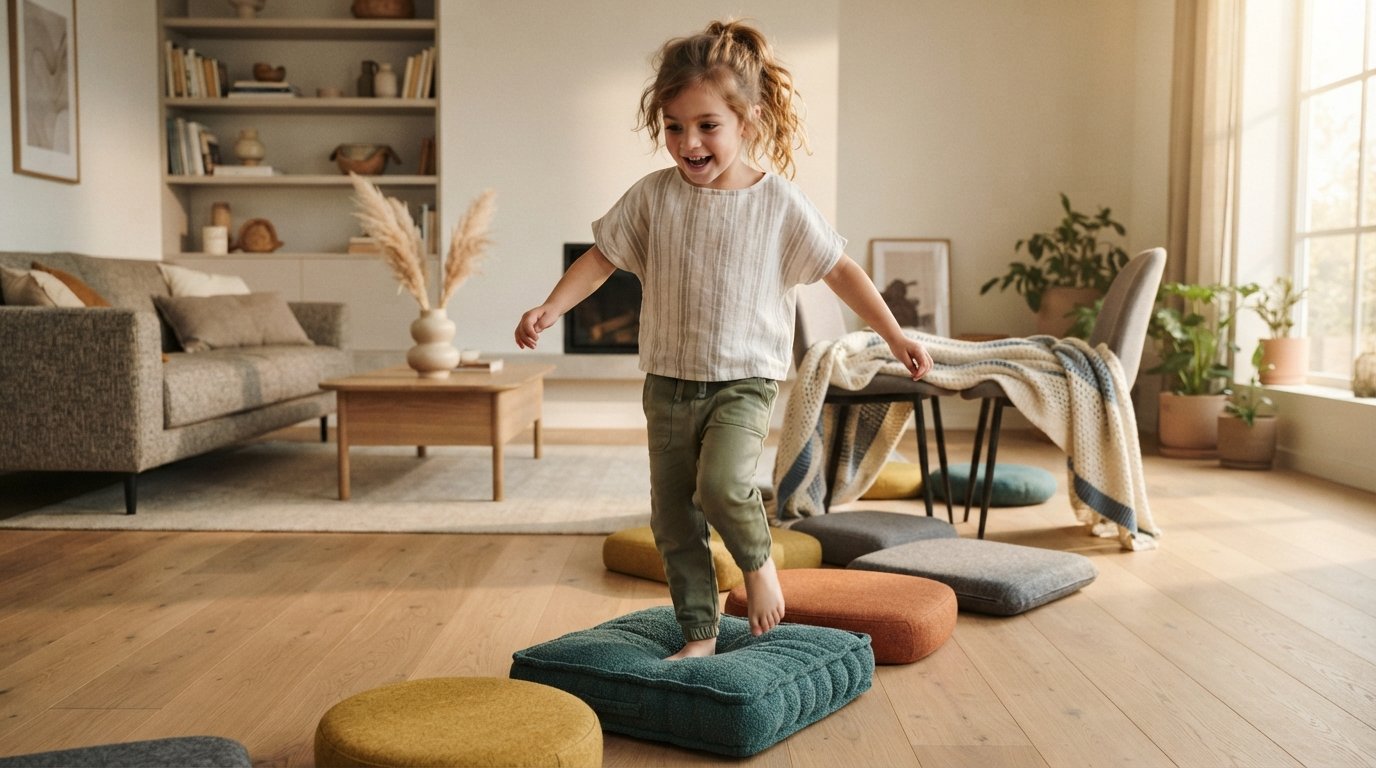
13. Make a Simple Indoor Obstacle Course
On a rainy day, an indoor obstacle course can help children move around without needing a screen.
Use safe household objects to create stations.
For example:
- Walk around a few pillows.
- Crawl underneath a table.
- Step over a rolled-up towel.
- Balance along a line of tape on the floor.
- Toss a soft ball into a laundry basket.
Keep the course appropriate for your child’s age and your available space. Remove anything that could cause a trip or fall.
You can change the course and let your child design one for you afterward.
14. Create a Family Art Gallery
Children often enjoy seeing their artwork displayed.
Choose a wall, refrigerator area, bulletin board, or another safe space and create a small temporary art gallery.
Let your child select which drawings or crafts should be displayed.
You can give each artwork a title and let the child explain what they made.
If you have more than one child, give each one a section of the display.
This can turn several ordinary drawings into something that feels like a real accomplishment.
15. Make an “I’m Bored” Activity Box
If you frequently hear, “I’m bored,” create a box filled with simple ideas they can choose from.
Write activities on small pieces of paper and put them into a container.
Ideas might include:
- Color a picture.
- Build something from cardboard.
- Read a book.
- Draw an animal.
- Make a paper airplane.
- Write a short story.
- Create a pretend restaurant.
- Organize a shelf.
- Make a puzzle.
- Draw a comic.
- Build a blanket fort.
When your child says they’re bored, they can choose one activity from the box.
You can change the suggestions occasionally so the box doesn’t become predictable.
How to Make Screen-Free Time Easier
Having a few screen-free activities for kids ready to go can make those moments much easier for parents. You don’t have to entertain your children every minute; instead, give them a few ideas and let them choose what sounds fun.
One of the biggest mistakes parents can make is assuming that every activity needs to be exciting from beginning to end.
It doesn’t.
Children may initially say they’re bored when a screen isn’t available. That’s not necessarily a sign that the activity isn’t good.
Give them some time to adjust.
You also don’t need to entertain your child every minute. Simple activities can give children opportunities to make decisions and use their imagination.
If your child doesn’t like one activity, try another. The goal isn’t to force them to complete a project. It’s to give them possibilities.
It can also help to keep a small container of basic supplies somewhere accessible.
Having crayons, paper, coloring pages, child-safe scissors, glue sticks, and craft materials ready to use makes it much easier to say yes when your child asks to make something.
Keep a Small List of Easy Activities
You don’t have to remember 15 activities every time your child is bored.
Choose five or six that work well for your family and keep them on a simple list.
Keeping a short list of favorite screen-free activities for kids on the refrigerator or inside an activity box can make bored moments easier to handle.
For example:
Our easy screen-free activities
- Coloring
- Reading
- Building
- Drawing
- Nature hunt
- Pretend play
Then add new ideas when you discover something your child enjoys.
Over time, you’ll have your own collection of activities that work for different ages, seasons, moods, and amounts of available time.
Screen-Free Doesn’t Have to Mean Complicated
Keeping kids busy without screens doesn’t require buying a house full of toys or planning a different craft every day.
A coloring page, a cardboard box, a few crayons, a book, or a simple treasure hunt can be enough to get started.
The most useful activities are often the ones that are easy for you to prepare and flexible enough for your child to make their own.
So the next time you hear, “I’m bored,” you don’t necessarily need to find something elaborate.
Hand them some crayons.
Give them a cardboard box.
Suggest a treasure hunt.
Open a book.
Or simply ask:
“What could you make with what we already have?”
Sometimes, that’s all the invitation a child’s imagination needs.
With a little preparation, screen-free activities for kids can become a normal part of your family’s routine rather than something you only try when everyone is bored.
Post Comment