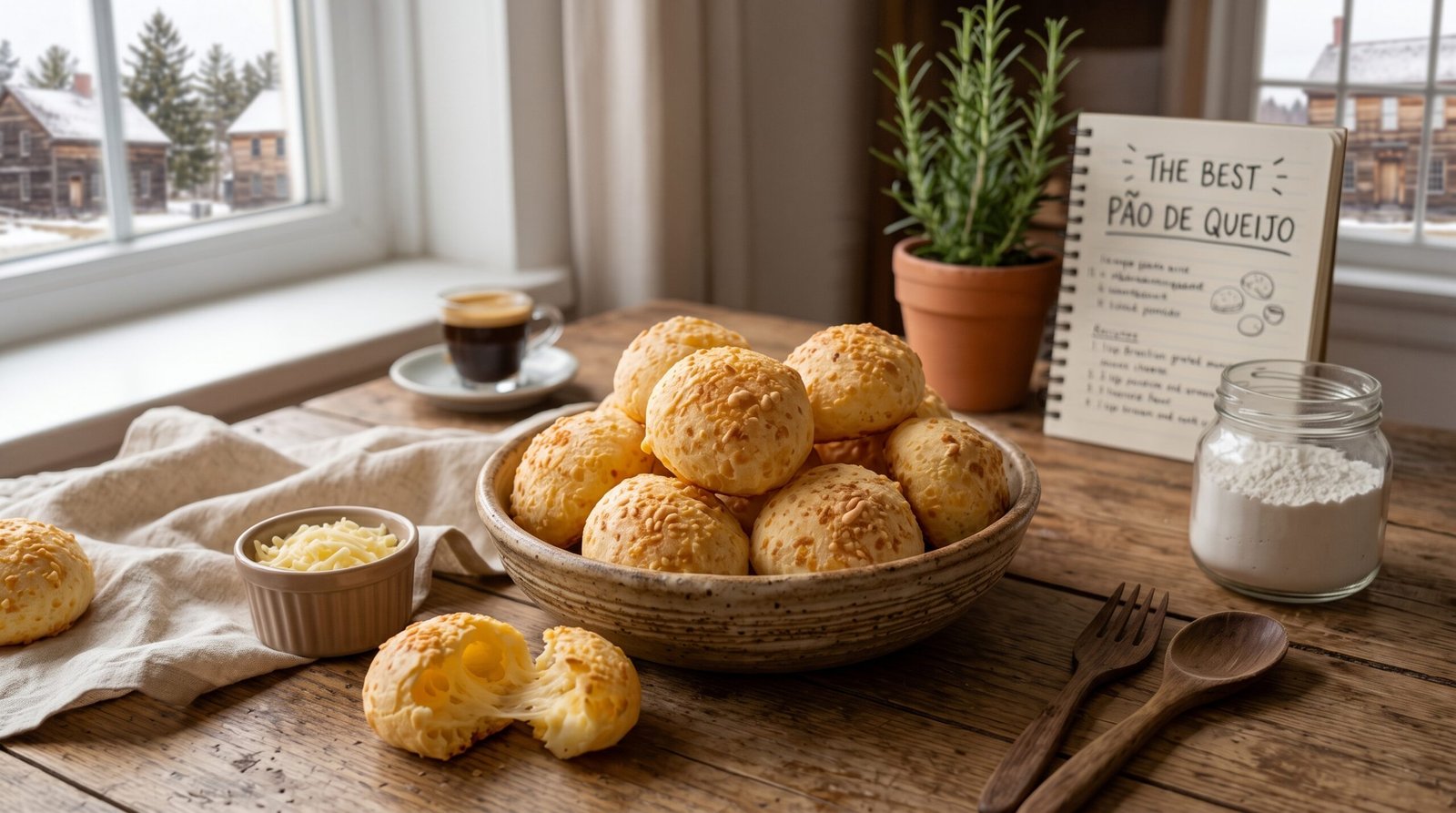
Few Brazilian foods are as recognizable and comforting as pão de queijo, the small cheese breads known for their golden exterior, chewy center, and rich cheese flavor.
In Brazil, pão de queijo is a familiar part of breakfast and afternoon coffee, but you do not need to travel to Brazil to enjoy it. With a handful of ingredients and the right technique, you can make a homemade version with the characteristic texture that makes these little breads so special.
Unlike conventional bread, pão de queijo does not use wheat flour or yeast. The foundation is tapioca starch, known in Brazil as polvilho, which gives the dough its distinctive elasticity and chewy texture.
One of the most important steps is also one of the most unusual for anyone unfamiliar with Brazilian baking: the starch is scalded with a hot mixture of milk, water, and oil before the eggs and cheese are added.
There are many Brazilian family recipes for pão de queijo. Some use only sour tapioca starch, while others combine sour and sweet starch. The cheese can also vary, with Minas cheese, meia-cura, Canastra, Parmesan, and other cheeses appearing in different versions.
This version focuses on the classic technique and ingredients that give Brazilian cheese bread its familiar character.
What Is Pão de Queijo?
Pão de queijo translates literally to “cheese bread,” but its texture is quite different from the wheat-based breads many American readers may picture.
Traditional Brazilian cheese bread is made with tapioca starch rather than wheat flour. The starch creates a soft, elastic dough that becomes lightly crisp on the outside and chewy inside as it bakes.
The recipe is especially associated with Minas Gerais, a Brazilian state known for its cheese and distinctive culinary traditions.
For another Brazilian example, Record’s Hoje em Dia pão de queijo recipe uses sour tapioca starch, hot water, milk, oil, egg, and meia-cura cheese.
Although pão de queijo is strongly associated with Minas Gerais, it is now enjoyed throughout Brazil. It can be found in bakeries, cafés, restaurants, homes, and even convenience stores.
It is particularly popular with coffee, making it a natural choice for breakfast or an afternoon snack.
Brazilian Pão de Queijo Ingredients
For this homemade version, you will need:
- 2 cups (about 250 g) sour tapioca starch (polvilho azedo)
- ½ cup whole milk
- ½ cup water
- ¼ cup vegetable oil
- 2 large eggs
- 1 to 1¼ cups finely grated Minas cheese or Minas meia-cura
- ½ teaspoon salt
If Minas cheese or meia-cura is difficult to find where you live, you can use a flavorful firm cheese as an alternative. However, the flavor will not be exactly the same as pão de queijo made with Brazilian cheese.
The amount of cheese can also vary depending on the cheese you use. Some Brazilian recipes use considerably more cheese, while others use less. What matters is creating a dough with enough cheese for flavor without making it excessively wet or difficult to shape.
How to Make Brazilian Cheese Bread
1. Prepare the Tapioca Starch
Place the 2 cups of sour tapioca starch in a large heatproof mixing bowl.
Add the salt and mix briefly.
Set the bowl aside while you prepare the liquid.
2. Boil the Milk, Water, and Oil
Add the milk, water, and vegetable oil to a saucepan.
Heat over medium heat until the mixture reaches a full boil.
The liquid needs to be very hot because it will be used to scald the tapioca starch.
3. Scald the Starch
Carefully pour the boiling liquid over the tapioca starch.
Using a sturdy spoon, begin mixing immediately.
The hot liquid will partially gelatinize the starch, creating the unusual sticky and elastic texture that eventually becomes pão de queijo.
The mixture may look uneven at first. Continue mixing until the liquid is incorporated throughout the starch.
Allow the mixture to cool until it is warm rather than hot.
This step is a fundamental part of many Brazilian pão de queijo recipes. Traditional recipes commonly boil the liquid before pouring it over the starch, then add eggs and cheese after the mixture has cooled enough to handle.
4. Add the Eggs
Add the eggs one at a time, mixing thoroughly after each addition.
At first, the dough may seem difficult to combine.
Keep mixing until the egg is incorporated before adding the next one.
The final dough should be soft, elastic, and somewhat sticky. It should not resemble conventional wheat bread dough.
5. Add the Cheese
Add the finely grated Minas cheese or meia-cura.
Work the cheese into the dough using a spoon at first and then your hands when the mixture becomes manageable.
Knead or squeeze the dough until the cheese is distributed evenly.
The dough should become soft enough to shape but should still have some elasticity.
If it feels extremely sticky, allow it to rest for a few minutes before trying to shape it. Slight differences in starch, cheese moisture, and egg size can affect the final consistency.
6. Shape the Pão de Queijo
Preheat the oven to 400°F (200°C).
Lightly grease your hands with a little oil if necessary.
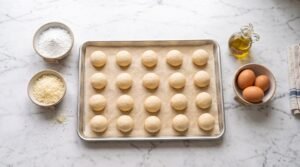
Take small portions of dough and roll them between your palms to form balls.
Place them on a baking sheet with space between each one.
You can make them small for snacks or slightly larger for a more substantial breakfast serving.
7. Bake Until Golden
Place the baking sheet in the preheated oven.
Bake for approximately 25–30 minutes, or until the pão de queijo has puffed and developed a light golden color.
The exact baking time will depend on the size of the cheese breads and your oven.
Avoid judging them only by the clock. Look for breads that have expanded and developed a lightly browned exterior.
Allow them to cool for several minutes before serving.
They are especially delicious while still warm.
5 Easy Tips for Better Pão de Queijo
1. Use the Right Tapioca Starch
The starch is the foundation of pão de queijo.
In Brazil, you will commonly see polvilho azedo, polvilho doce, or combinations of the two.
For this recipe, we are using polvilho azedo, also called sour tapioca starch.
The type of starch can influence the texture, flavor, and amount of expansion during baking. Brazilian recipes vary considerably in this respect, so there is not one universal formula used by every household.
For an American kitchen, look for a package labeled tapioca starch or tapioca flour, and check the product description carefully if you specifically want sour tapioca starch.
2. Do Not Skip the Scalding Step
If there is one technique worth paying attention to, it is this one.
The hot liquid is poured directly over the tapioca starch.
This process is known as escaldar o polvilho, or scalding the starch.
It helps transform the starch into the sticky, elastic dough needed for pão de queijo.
Many Brazilian recipes use this method, although the exact liquid mixture differs from recipe to recipe. Some use milk and oil, some add water, and some use different proportions.
Do not treat this step like simply warming the ingredients together. The boiling liquid needs to come into direct contact with the starch.
3. Let the Dough Cool Before Adding the Eggs
Patience matters here.
After the hot liquid has been incorporated, allow the mixture to cool until it is warm enough to handle.
You do not want to add the eggs while the dough is extremely hot.
Adding the eggs after the mixture has cooled somewhat makes them easier to incorporate evenly.
Brazilian recipes commonly add the eggs after the scalded starch has cooled or become warm enough to work with.
4. Choose a Flavorful Cheese
Cheese is not just an ingredient in pão de queijo. It is one of the defining flavors.
If you can find Minas cheese or queijo meia-cura, it is an excellent choice for a more Brazilian flavor.
Queijo Canastra is another traditional cheese associated with Minas Gerais and is used in some pão de queijo recipes.
If those cheeses are unavailable, you can use another firm, flavorful cheese. Just remember that the final flavor will change depending on what you choose.
Finely grating the cheese also helps it distribute throughout the dough.

5. Bake and Serve Them Warm
Pão de queijo is especially enjoyable shortly after it comes out of the oven.
The outside develops a lightly crisp surface while the inside stays soft and chewy.
That contrast is one of the characteristics people love most about Brazilian cheese bread.
Serve it as part of breakfast, alongside coffee in the afternoon, or as a snack whenever you want something warm and savory.
Why Brazilians Love Pão de Queijo With Coffee
Pão de queijo and coffee are a classic combination.
The rich, salty flavor of the cheese works naturally with the aroma and bitterness of coffee.
Brazilian cheese bread is especially enjoyable with a freshly brewed cup of coffee, making this pairing a simple way to experience a beloved Brazilian snack.
For many Brazilians, this is more than a recipe pairing. It is part of an everyday food tradition.
A plate of warm pão de queijo can turn an ordinary coffee break into something comforting and familiar.
If you enjoy simple homemade foods that pair beautifully with coffee, you may also enjoy our Yogurt Cake: Easy, Moist & Delicious Homemade Recipe.
The yogurt cake offers a completely different texture and flavor, but it makes the same kind of easy homemade breakfast or afternoon snack.
Common Questions About Brazilian Cheese Bread
Is pão de queijo gluten-free?
Traditional pão de queijo is made with tapioca starch rather than wheat flour, so it is naturally gluten-free.
However, if you need to avoid gluten for medical reasons, check the labels of all packaged ingredients and be aware of possible cross-contact during preparation.
What is polvilho azedo?
Polvilho azedo is a type of sour tapioca starch made from cassava.
It is commonly used in Brazilian cooking and is one of the starches used to make pão de queijo.
It behaves differently from wheat flour and contributes to the characteristic texture of Brazilian cheese bread.
Can I use regular tapioca flour?
In the United States, tapioca flour and tapioca starch are often different names for the same basic cassava-derived ingredient.
However, polvilho azedo has specific characteristics, so if you want to reproduce the flavor and texture of a Brazilian recipe as closely as possible, look specifically for sour tapioca starch.
Why is my pão de queijo not chewy?
Several things can affect the final texture.
The type of starch, amount of liquid, size of the eggs, moisture in the cheese, and baking time can all make a difference.
The dough should be elastic and soft rather than dry and crumbly.
The scalding process is also important because it changes the starch and helps create the characteristic chewiness.
Can I freeze pão de queijo?
Yes. Brazilian pão de queijo is commonly prepared ahead and frozen, particularly after shaping the dough into balls.
One practical approach is to arrange the unbaked balls on a tray and freeze them until firm before transferring them to a freezer-safe container.
This keeps the individual pieces from sticking together.
When baking from frozen, cooking time may need to be adjusted depending on the size of the pão de queijo and your oven.
A Taste of Brazilian Comfort at Home
Pão de queijo is a great example of how a small number of familiar ingredients can create something completely distinctive.
This is what makes Brazilian cheese bread so appealing: a simple recipe can create a texture and flavor that feel completely different from ordinary bread.
Tapioca starch provides the foundation. The hot liquid transforms its texture. Eggs help bind the dough, while cheese gives the bread its unmistakable savory flavor.
The technique may seem unusual if you have never made Brazilian cheese bread before, but once you understand the purpose of scalding the starch, the recipe becomes much easier to follow.
And there is plenty of room for variation.
Some Brazilian recipes use only sour starch. Others combine sour and sweet starch. Some use Minas cheese, some Canastra, and others use Parmesan or different combinations of cheeses.
That variety is part of what makes pão de queijo so interesting.
There is no single family recipe that represents every Brazilian kitchen.
What remains consistent is the unmistakable combination of tapioca starch, cheese, and that soft, chewy texture.
Bake a batch, make a cup of coffee, and enjoy one of Brazil’s most beloved comfort foods warm from the oven.
One Simple Recipe, Many Brazilian Variations
If you are making pão de queijo for the first time, focus on the technique rather than expecting the dough to behave like traditional bread dough.
Scald the starch properly.
Let it cool before adding the eggs.
Use a flavorful cheese.
Shape the dough into small balls.
And bake until the breads are puffed and lightly golden.
Once you understand those basics, you can experiment with different cheeses and combinations of tapioca starch to find the version you enjoy most.
That is part of the beauty of homemade pão de queijo: a simple Brazilian recipe can become your own favorite version while still preserving the distinctive texture and character that make it so special.

Post Comment