

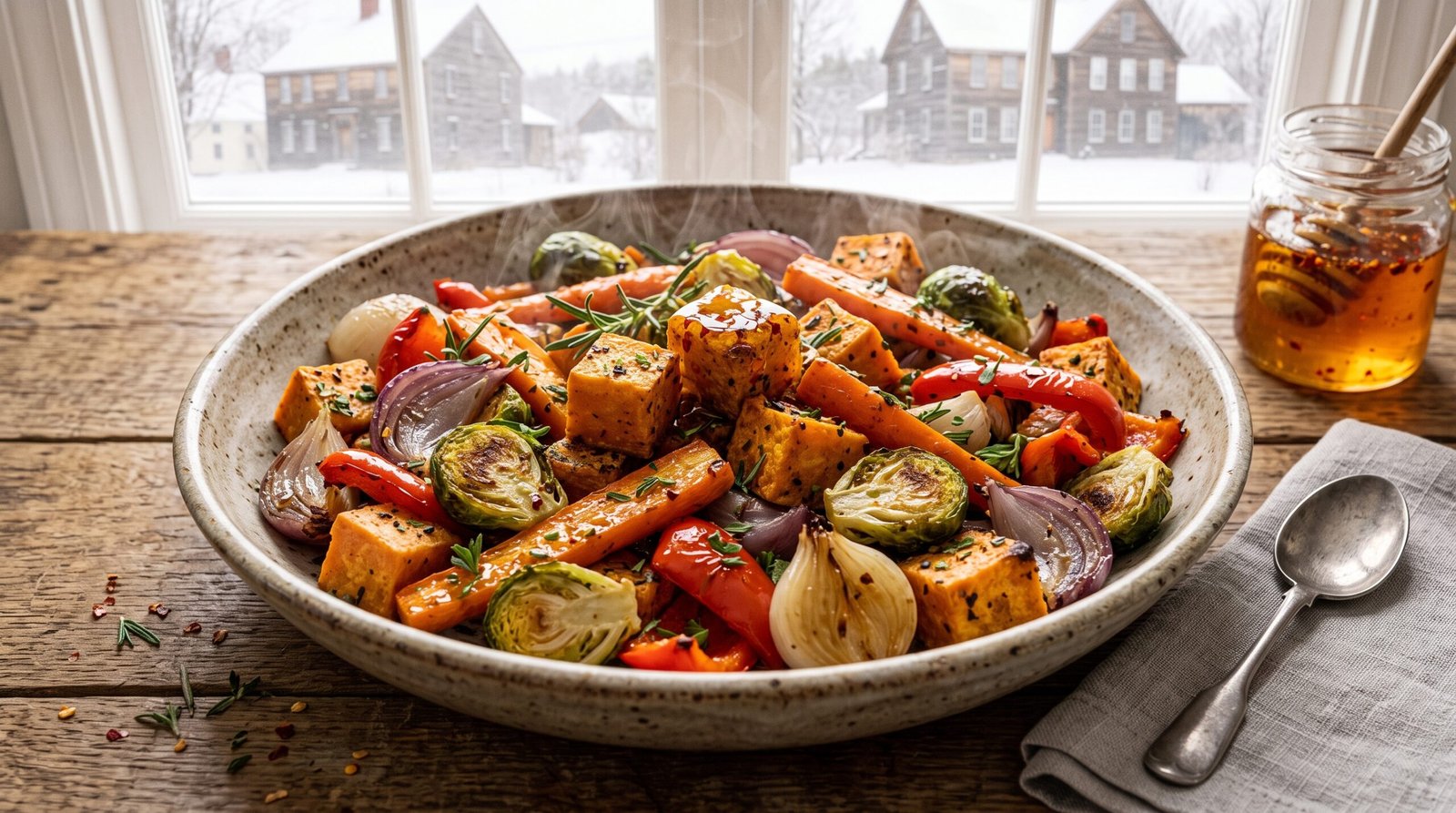
A colorful pan of roasted vegetables can turn simple ingredients into a side dish that feels much more special than the effort required to make it.
These herb-roasted vegetables combine sweet potatoes, carrots, Brussels sprouts, red bell pepper, and red onion with olive oil, garlic, and fresh herbs. The result is a mixture of tender vegetables, caramelized edges, savory garlic, and fresh herbal flavor.
The beauty of roasting is that you do not need a complicated sauce or a long list of ingredients. High heat does much of the work, helping vegetables develop deeper flavors and browned edges while keeping their natural character.
This recipe is easy enough for a weeknight dinner but colorful enough to serve when you have guests. It can also change with the seasons, making it a useful recipe to keep in your kitchen.
The key, however, is not simply putting everything on a baking sheet and waiting.
Different vegetables cook at different speeds. Sweet potatoes and carrots need more time to become tender, while bell peppers and onions soften more quickly. Brussels sprouts fall somewhere in between. Staggering the vegetables and giving them enough space helps you get better texture and more even browning.
Why Roasting Makes Vegetables Taste So Good
Roasting is one of the easiest ways to bring out the natural flavors of vegetables.
Instead of cooking them in water, roasting exposes them directly to the dry heat of the oven. As moisture is driven off, the vegetables can develop browned surfaces and more concentrated flavors.
Sweet potatoes become creamy in the center with golden edges.
Carrots become naturally sweeter and develop deeper roasted notes.
Brussels sprouts can become tender inside while their outer leaves brown and crisp.
Red onion softens and becomes sweeter as it roasts.
Bell pepper becomes tender with lightly charred edges.
Together, these vegetables create several textures and flavors on the same pan.
High oven temperatures are commonly recommended for roasted vegetables because they encourage browning and caramelization. A 425°F oven is particularly useful for this style of cooking.
Herb-Roasted Vegetables Recipe
Recipe at a Glance
Prep time: 15 minutes
Cook time: About 30–40 minutes
Total time: About 45–55 minutes
Servings: 6
Oven temperature: 425°F (220°C)
The cooking time can vary depending on the size of the vegetable pieces and how crowded the baking sheet is. Instead of relying only on the clock, look for vegetables that are tender inside and nicely browned around the edges.
Ingredients You’ll Need
- 2 cups carrots, peeled and cut into sticks
- 2 cups Brussels sprouts, trimmed and halved
- 2 cups sweet potatoes, cut into cubes
- 1 large red bell pepper, cut into bite-sized pieces
- 1 red onion, cut into wedges
- 3 tablespoons extra-virgin olive oil
- 2 tablespoons fresh herbs, such as rosemary, thyme, and parsley
- 3 cloves garlic, minced
- Salt, to taste
- Black pepper, to taste
Fresh rosemary, thyme, and parsley create a classic herb combination, but you can adjust the herbs according to what you have available.
The important thing is to cut the vegetables into reasonably similar pieces within each type. This helps them cook more evenly.

How to Prepare the Vegetables
Start by washing and preparing all of the vegetables.
Peel the carrots and cut them into sticks that are not too thin.
Trim the Brussels sprouts and cut them in half. If some sprouts are particularly large, you can quarter them so they cook at a similar rate to the smaller ones.
Peel the sweet potatoes if desired and cut them into relatively even cubes.
Remove the seeds from the red bell pepper and cut it into pieces large enough to hold their shape during roasting.
Cut the red onion into wedges rather than very small pieces.
The goal is not for every vegetable to have exactly the same shape. Instead, think about relative size and cooking time.
Dense vegetables such as carrots and sweet potatoes generally need more time than softer vegetables. This is why staggered roasting can produce a better result than putting everything into the oven at once.
How to Make Herb-Roasted Vegetables
1. Preheat the Oven
Preheat your oven to 425°F (220°C).
Allow the oven to reach temperature before adding the vegetables.
A properly heated oven helps the vegetables begin roasting immediately instead of spending the first part of cooking simply warming up.
2. Start With the Denser Vegetables
Place the sweet potatoes and carrots in a large bowl.
Add about half of the olive oil, some salt and black pepper, and part of the garlic and herbs.
Toss until the vegetables are lightly coated.
Spread the carrots and sweet potatoes across a large baking sheet in a single layer.
Try to leave space between the pieces.
Roast for approximately 10–15 minutes before adding the faster-cooking vegetables.
This small adjustment is important for this particular combination because carrots and sweet potatoes are denser than bell peppers and onions.
3. Add the Brussels Sprouts, Pepper, and Onion
While the first vegetables are roasting, combine the Brussels sprouts, red bell pepper, and red onion with the remaining olive oil, garlic, herbs, salt, and black pepper.
After the carrots and sweet potatoes have had their initial roasting time, carefully add the remaining vegetables to the baking sheet.
Spread everything out again so the vegetables are not piled on top of each other.
Return the pan to the oven.
Roast for another 15–25 minutes, tossing once during cooking if necessary.
The vegetables are ready when the centers are tender and the edges have developed attractive golden-brown areas.
The exact timing will depend on the size of your pieces and your oven.
These herb-roasted vegetables are ready when the centers are tender and the edges have developed a deep golden-brown color.
4. Check for Browning and Tenderness
Do not rely entirely on the recipe timer.
Pierce a carrot or sweet potato with a fork.
It should be tender without falling apart.
The Brussels sprouts should be tender and browned around the edges.
The pepper and onion should be softened with some roasted color.
If the vegetables are tender but still pale, give them a little more time.
If the edges are browning too quickly while the centers remain firm, reduce the heat slightly or continue cooking while watching them closely.
5. Finish and Serve
Remove the vegetables from the oven once they are tender and nicely browned.
Taste and adjust the salt and black pepper if necessary.
For a fresh finish, scatter a little chopped parsley over the top.
You can also add a small squeeze of fresh lemon juice immediately before serving.
Serve the vegetables warm.
5 Easy Tips for Better Herb-Roasted Vegetables
1. Give Different Vegetables the Time They Need
This is the most important adjustment for this recipe.
Not every vegetable cooks at the same speed.
Sweet potatoes and carrots are dense and need enough time to soften. Bell peppers and red onions cook more quickly. Brussels sprouts can roast well at the same temperature but benefit from being cut appropriately.
Instead of forcing every ingredient into exactly the same cooking schedule, give the denser vegetables a head start.
This simple technique can help prevent a common problem: vegetables that are perfectly browned on the outside but still too firm inside.
It also gives softer vegetables less opportunity to become overly soft.
When creating your own sheet-pan combinations, think about the vegetables in groups: dense, medium, and quick-cooking.
That small bit of planning can make a noticeable difference.
2. Don’t Overcrowd the Baking Sheet
One of the easiest ways to end up with soft roasted vegetables is to put too many of them on one pan.
Vegetables naturally release moisture as they cook. If the pieces are packed tightly together, that moisture can build up around them instead of allowing the surfaces to brown properly.
The result can be vegetables that are tender but pale rather than deeply roasted.
Professional cooking guidance commonly emphasizes giving vegetables enough room for air circulation and browning. If the quantity is too large for one pan, using two baking sheets is often better than creating one crowded layer.
For more guidance on roasting vegetables, EatingWell’s vegetable roasting guide offers a useful reference for different vegetables, preparation methods, and roasting times.
So do not worry about using an extra pan.
A little extra space can be more valuable than trying to fit everything onto one baking sheet.
3. Cut the Vegetables With Cooking Time in Mind
Uniform cutting does not mean every vegetable needs to be identical.
Instead, adjust the size according to how quickly each vegetable cooks.
For example, carrots can be cut into relatively thin sticks while sweet potatoes can be cut into moderate cubes.
Very large sweet potato pieces may still be firm when smaller pieces of bell pepper are already soft.
The same principle applies when trying other vegetables.
If you add a dense vegetable, cut it smaller.
If you add a softer vegetable, larger pieces may help it maintain its texture.
This approach makes roasted vegetable recipes much more forgiving.
4. Let the Herbs Complement the Vegetables
Rosemary, thyme, and parsley work particularly well with this combination.
Rosemary has a strong, aromatic character that pairs naturally with potatoes and root vegetables.
Thyme brings an earthy, slightly floral quality.
Parsley adds freshness and helps brighten the finished dish.
You do not have to use all three.
Depending on the season, you can experiment with oregano, sage, chives, marjoram, or other herbs.
For an autumn-inspired version, rosemary and sage pair beautifully with sweet potatoes and carrots.
For a Mediterranean-inspired variation, oregano, garlic, and lemon can create a brighter flavor.
One useful approach is to use sturdier herbs during roasting and save some fresh parsley or other delicate herbs for the end.
This gives the finished vegetables both roasted herbal depth and a fresher aroma.
5. Finish the Vegetables After Roasting
The vegetables already have plenty of flavor from olive oil, garlic, herbs, salt, and high-heat roasting.
But a small finishing ingredient can change the character of the entire dish.
Try:
- Fresh lemon juice for brightness
- Lemon zest for a fragrant citrus note
- Parmesan for savory richness
- Feta for a salty, creamy contrast
- Toasted nuts for crunch
- Red pepper flakes for heat
- A small drizzle of balsamic glaze for sweetness and acidity
The key is moderation.
A finishing ingredient should enhance the roasted vegetables rather than cover their natural flavors.
Why These Vegetables Work So Well Together
This particular combination was chosen for contrast.
That balance is what makes these herb-roasted vegetables more interesting than a side dish made with just one type of vegetable.
Sweet potatoes contribute sweetness and a creamy texture.
Carrots bring another layer of natural sweetness while remaining firm enough to develop roasted edges.
Brussels sprouts contribute a more earthy and slightly nutty flavor.
Red bell pepper adds color and a softer, sweeter texture.
Red onion becomes mellow and sweet as it roasts.
Garlic and herbs tie the flavors together.
The result is not simply a pile of vegetables. Each ingredient brings something different to the finished dish.
That is one reason roasted vegetable combinations can feel much more interesting than steamed or boiled vegetables.
How to Make the Herbs Shine
Fresh herbs can make a simple vegetable dish feel more polished.
For this recipe, rosemary, thyme, and parsley are an easy starting point.
If you are using fresh rosemary, chop it finely enough that you do not get large woody pieces in individual bites.
Thyme leaves can be added directly to the vegetables.
Parsley is especially nice as a finishing herb because its fresh flavor contrasts with the deeper roasted notes.
If you only have dried herbs, you can still make the recipe.
Dried herbs are more concentrated, so start with a smaller amount and adjust according to taste.
Seasonal Variations
One of the best things about roasted vegetables is that the basic technique works throughout the year.
Spring
Try asparagus, baby carrots, radishes, or other vegetables that become available in spring.
Summer
Zucchini, yellow squash, cherry tomatoes, and bell peppers can create a lighter roasted combination.
Because some summer vegetables contain more water, avoid overcrowding the pan.
Autumn
Sweet potatoes, Brussels sprouts, carrots, pumpkin, and winter squash are natural choices.
Rosemary and sage work especially well with these ingredients.
Winter
Root vegetables such as parsnips, turnips, beets, and rutabaga can create a hearty winter combination.
The basic method stays the same: cut appropriately, season well, give the vegetables room, and roast until tender and browned.
How to Turn Roasted Vegetables Into a Complete Meal
Although herb-roasted vegetables make an excellent side dish, they can also become part of a complete meal.
Serve them with:
- Grilled chicken
- Roasted turkey
- Baked or grilled fish
- Steak
- Eggs
- Lentils
- Beans
- Quinoa
- Brown rice
You can also spoon the roasted vegetables over salad greens and add a simple dressing.
For another hearty meal idea using sweet potatoes, you can pair them with our Hot Honey Cottage Cheese Sweet Potato Beef Bowl.
That gives you another way to turn roasted vegetables into part of a satisfying dinner rather than treating them only as a side dish.
Meal Prep and Storage
Roasted vegetables can be useful for meal preparation because a large batch can become part of several meals.
After cooking, allow the vegetables to cool appropriately before transferring them to an airtight container.
Refrigerate leftovers and use them within a safe storage period.
For the best texture, reheat them in an oven, toaster oven, or air fryer.
The microwave is convenient, but it can make already-tender vegetables softer.
Leftover roasted vegetables can also be used cold or at room temperature in salads, wraps, grain bowls, or lunch boxes.
Common Questions About Roasted Vegetables
Why are my roasted vegetables soggy?
The most common problem is usually too much moisture and not enough space.
Overcrowding the pan allows vegetables to steam instead of brown.
Try using a larger baking sheet or dividing the vegetables between two pans.
Also make sure the oven is fully preheated before the vegetables go inside.
Why are some vegetables cooked before others?
Different vegetables have different densities and moisture levels.
A large piece of sweet potato will naturally need more time than a small piece of bell pepper.
Cutting the vegetables appropriately and staggering their cooking times can help solve this problem.
Can I use dried herbs instead of fresh?
Yes.
Dried herbs can work well in roasted vegetables. Because their flavor is more concentrated, start with less than you would use of fresh herbs.
You can also combine dried herbs during roasting with a small amount of fresh parsley at the end.
Can I leave out the garlic?
Absolutely.
Garlic adds savory depth, but the recipe will still work without it.
You can increase the herbs slightly or use another seasoning you enjoy.
Can I change the vegetables?
Yes, and that is one of the advantages of this type of recipe.
Just remember to consider cooking times.
If you replace a dense vegetable with another dense vegetable, the timing may remain similar.
If you add something that cooks quickly, consider adding it later.
How to Make This Recipe Your Own
Once you understand the basic roasting method, you do not have to make the exact same vegetable combination every time.
You can change the herbs.
You can use seasonal vegetables.
You can add a finishing sauce.
You can make the vegetables more savory with Parmesan or feta.
You can add a little heat with red pepper flakes.
Or you can keep everything simple with olive oil, garlic, salt, pepper, and herbs.
The most important principles remain the same:
Cut thoughtfully.
Season evenly.
Give the vegetables enough space.
Use a hot oven.
Pay attention to cooking times.
These simple habits make roasted vegetables much easier to prepare successfully.
A Simple Side Dish That Feels Special
These herb-roasted vegetables are simple enough for a weeknight meal but polished enough to serve when you’re entertaining.
There is something satisfying about watching ordinary vegetables change in the oven.
The sweet potatoes become golden.
The carrots develop caramelized edges.
The Brussels sprouts become tender and browned.
The red onion softens.
The bell pepper becomes sweet and fragrant.
Fresh herbs and garlic bring everything together.
The finished dish looks colorful enough for a dinner with guests, but the technique is simple enough for an ordinary weeknight.
And because the recipe is flexible, you can return to it throughout the year without making exactly the same dish every time.
Roasted vegetables are proof that simple ingredients do not have to produce a boring meal.
Sometimes all they need is a little olive oil, a few herbs, enough space, and a hot oven.