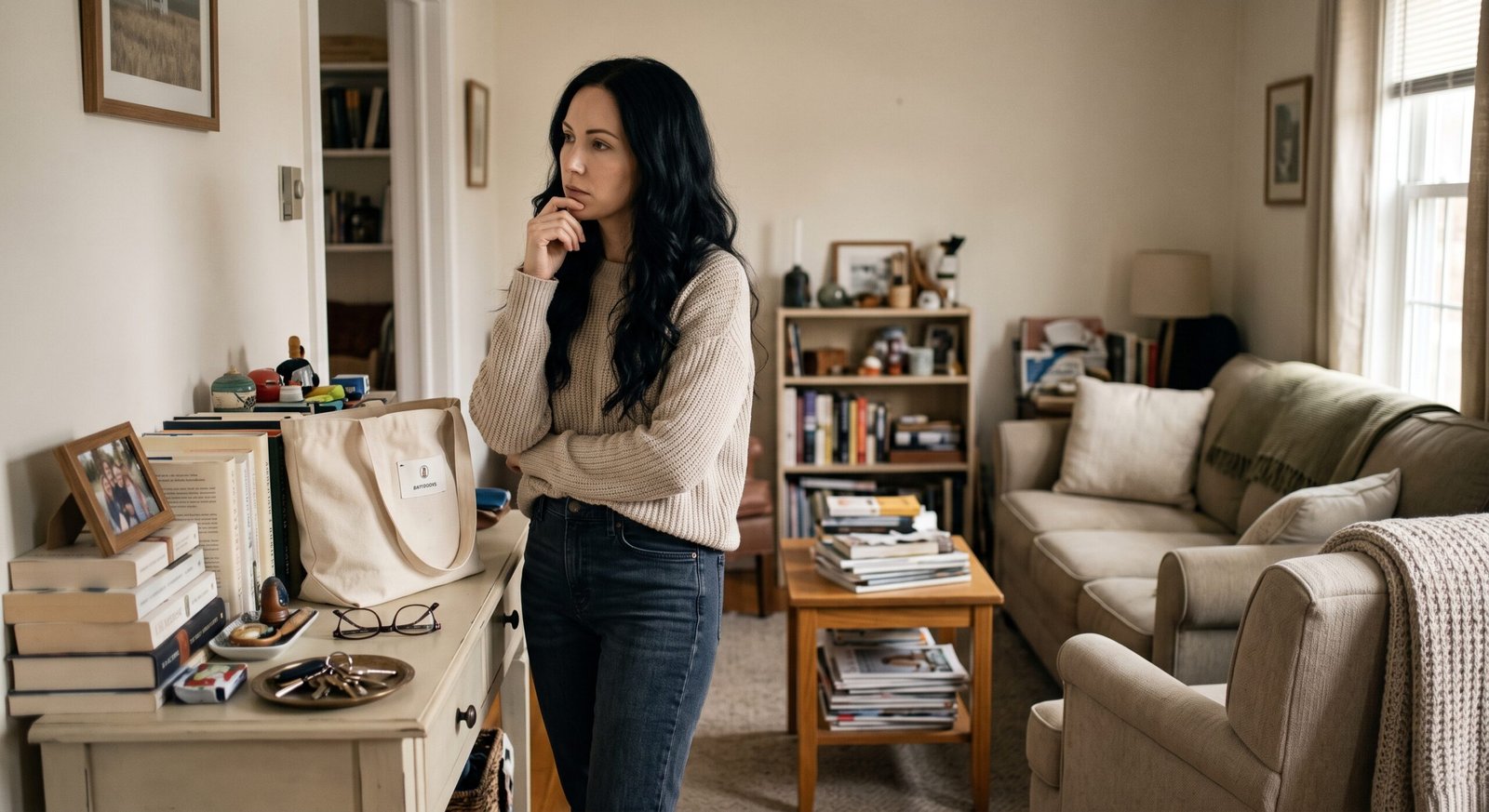
A small home can feel surprisingly spacious when everything has a place and the room is working with you instead of against you.
The problem is that many organization tips assume you have plenty of storage to begin with. They recommend adding more bins, shelves, baskets, and containers without first asking whether you actually need to keep everything you already have.
In a smaller home, every item competes for valuable space. A countertop may need to function as a workspace, a dining surface, and a place to prepare food. A bedroom corner may need to hold clothing, books, and a small desk. Even the entryway may have to accommodate shoes, coats, bags, keys, and mail in only a few square feet.
That is why the best small home organization ideas are not necessarily about buying more storage. They are about making better use of the space you already have.
If your home feels crowded even though you regularly clean it, these 12 ideas can help you create more breathing room without a major renovation or an expensive makeover.
12 Small Home Organization Ideas That Actually Make a Difference
Before choosing containers or purchasing new furniture, look at how your home functions every day. The goal is not to make every room look perfectly styled. It is to make the things you use most often easier to store, find, and put away.
1. Declutter Before You Add Storage
One of the biggest mistakes people make when organizing a small home is trying to organize everything before deciding what actually needs to stay.
If a drawer is overflowing, adding another organizer may only make the drawer more complicated. If a closet is packed, buying more hangers will not create additional room.
Start with one small area instead.
Choose a drawer, shelf, cabinet, or section of a closet. Remove everything and sort the contents into a few simple categories:
- Keep
- Relocate
- Donate
- Discard
You do not need to make difficult decisions about your entire house in one weekend.
A smaller starting point is often easier to finish, and finishing one space can give you a better idea of what your home actually needs.
This approach also prevents you from spending money on storage products for items you ultimately decide not to keep.
2. Use Vertical Space Instead of More Floor Space
When floor space is limited, look up.
Walls, the backs of doors, and the space above existing furniture can provide valuable storage opportunities without taking much usable floor area.
Depending on your home and whether you rent or own, you might use:
- floating shelves;
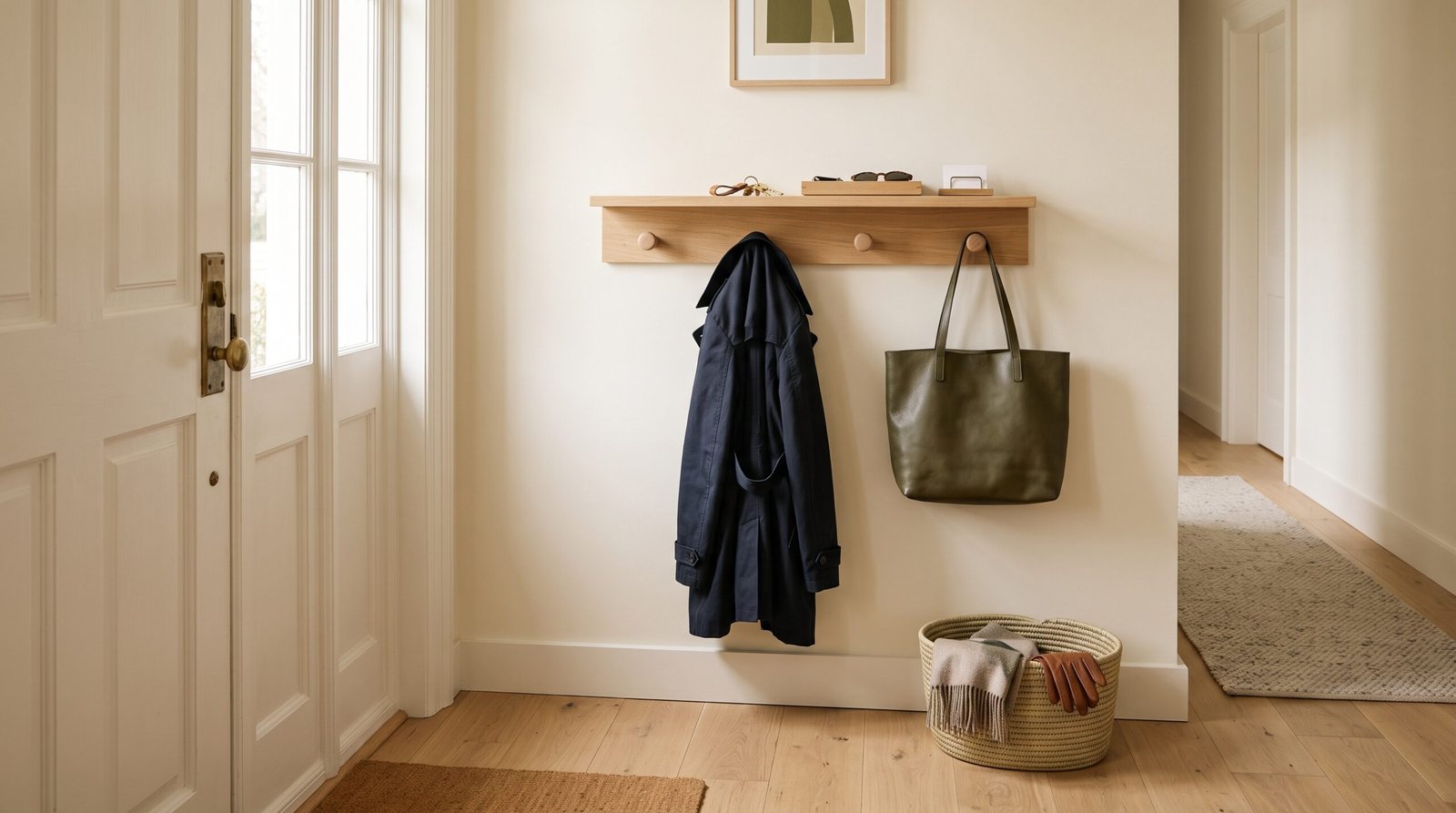
- wall-mounted hooks;
- peg rails;
- narrow shelving;
- over-the-door organizers;
- hanging baskets;
- vertical file holders.
The key is to use vertical storage intentionally.
A wall covered with shelves can still make a small room feel visually busy. Instead, choose one or two areas where vertical storage solves a specific problem.
For example, a narrow shelf near an entryway could hold keys and small everyday items, while hooks underneath provide a place for bags.
3. Create a Drop Zone for Everyday Clutter
Small homes often become messy because everyday objects do not have an obvious destination.
Keys land on the kitchen counter. Mail moves from one surface to another. Bags end up on a chair. Shoes collect near the door.
A small drop zone can interrupt this cycle.
It does not need to be elaborate. A wall hook, small tray, basket, or narrow shelf may be enough.
The most important question is:
What do you usually put down when you walk through the door?
Build the drop zone around those items.
If you regularly carry a handbag, coat, keys, and mail, create storage for those things rather than creating a generic entryway display.
A good organization system should match your actual habits.
4. Give Each Room a Primary Function
Small rooms often have to serve multiple purposes, but that does not mean everything needs to be stored everywhere.
A living room might also be a workspace. A bedroom might contain exercise equipment. A dining area might double as a homework station.
Create clear zones within the room.
For example:
- one area for relaxing;
- one area for working;
- one area for eating;
- one area for children’s activities.
Then keep the items associated with each activity as close as practical to that zone.
This reduces the feeling that the entire room is one large storage area.
It also makes cleanup easier because objects have a logical destination.
5. Choose Furniture That Does More Than One Job
When space is limited, furniture can either help solve your storage problem or make it worse.
Look for pieces that serve more than one purpose when they genuinely fit your lifestyle.
Examples include:
- an ottoman with hidden storage;
- a bench with a lift-up seat;
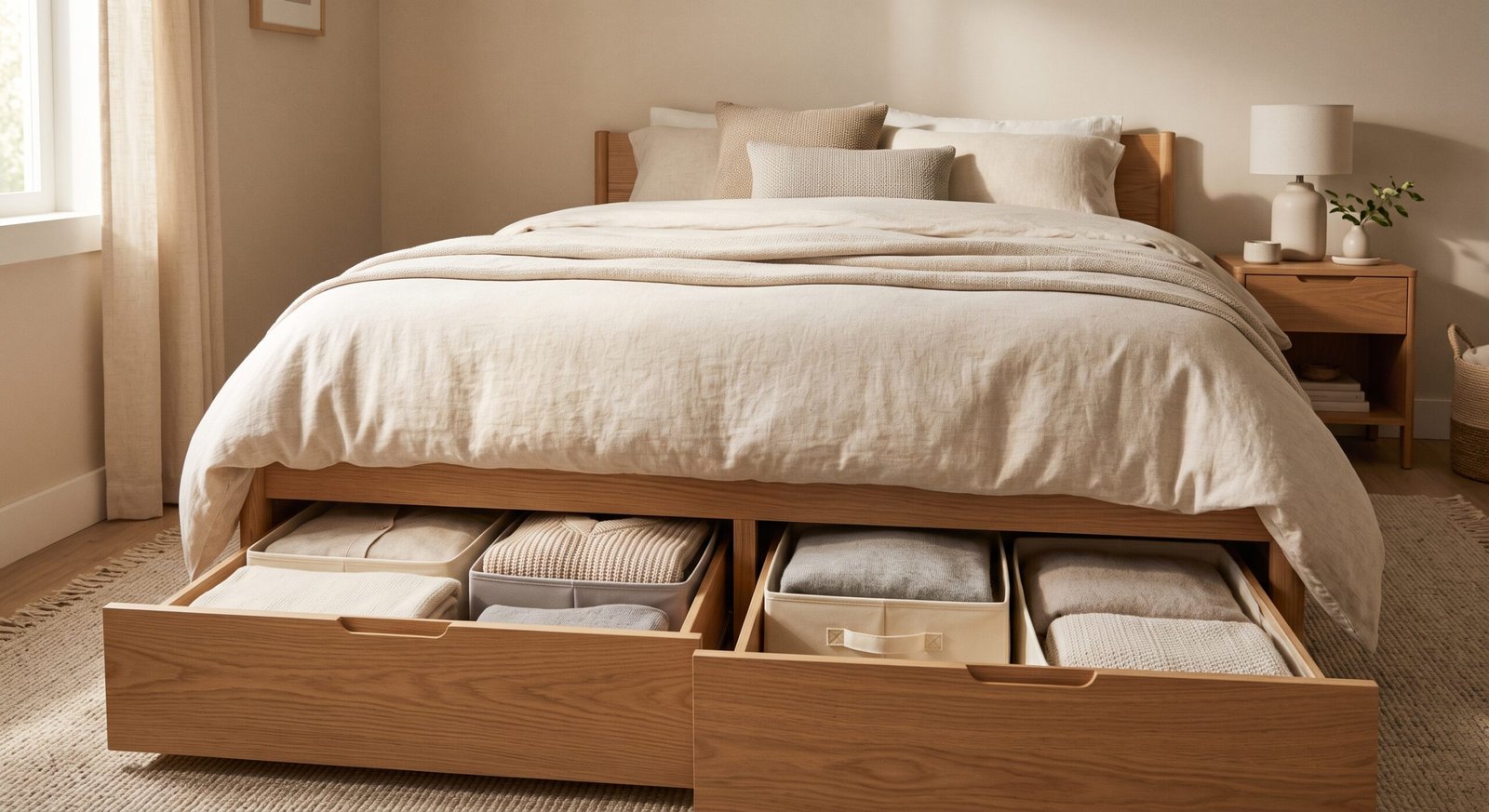
- a bed with drawers underneath;
- a narrow console that doubles as a work surface;
- a small dining table that can serve as a workspace;
- nesting tables that can be separated when needed.
But multifunctional does not automatically mean better.
A large storage ottoman may technically provide storage while making a small room harder to move through.
Measure the furniture before buying it and consider the walking space around it.
The goal is not to maximize the amount of furniture you can fit into a room. It is to maximize what the furniture can accomplish.
6. Make the Space Under Your Furniture Work Harder
The space underneath beds, sofas, benches, and other raised furniture is often overlooked.
If the area is accessible, it can be useful for items that you do not need every day.
Seasonal clothing, extra bedding, holiday decorations, and occasional-use items can sometimes be stored there in appropriately sized containers.
Use containers that are easy to identify and pull out. Avoid creating a deep storage area where everything gets pushed to the back and forgotten.
A useful rule is to store less frequently used items farther away and everyday items closer to you.
This simple distinction can make a small storage area much easier to maintain.
7. Use the Back of Doors
Doors offer one of the easiest opportunities to gain storage without taking over a room.
Depending on the door and the weight of the items, an over-the-door organizer can hold things such as:
- cleaning supplies;
- accessories;
- shoes;
- toiletries;
- small pantry items;
- wrapping supplies;
- craft materials.
For renters, this can be particularly useful because some options do not require permanent installation.
However, check the product’s weight limits and make sure the door can still open and close properly.
A storage solution is only helpful if it does not create a new problem.
8. Reduce Visual Clutter on Open Surfaces
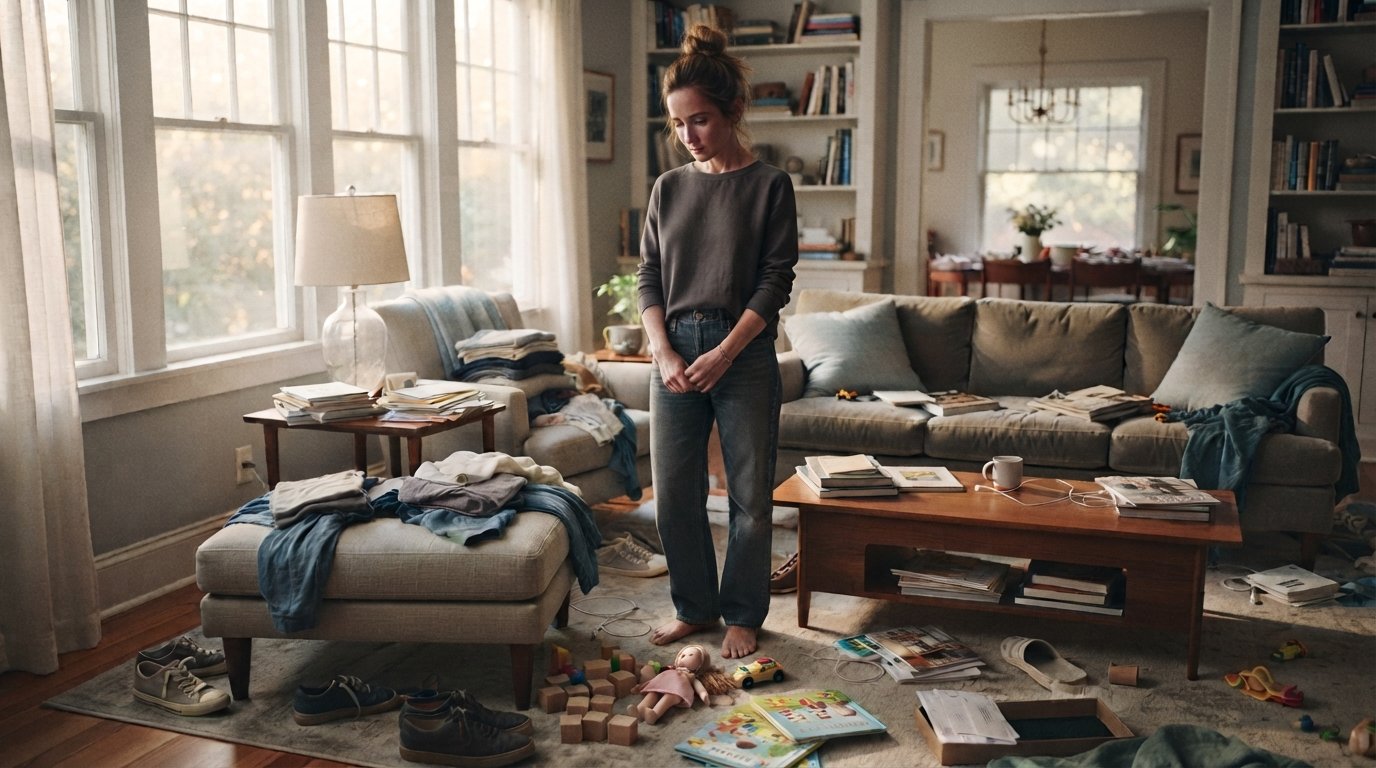
A room can be technically organized and still look crowded.
Counters, coffee tables, dressers, and open shelves tend to collect small objects because they are convenient places to put things temporarily.
Try giving each surface a purpose.
For example, instead of allowing a kitchen counter to become general storage, decide what actually belongs there.
You might keep only the appliances and items you use every day while moving occasional-use equipment into cabinets.
In the living room, a tray can gather a few small objects together instead of allowing them to spread across the entire surface.
This creates visual boundaries without requiring additional storage.
The goal is not to remove personality from your home. It is to make the objects you choose to display feel intentional.
9. Create One Small Home for Paperwork
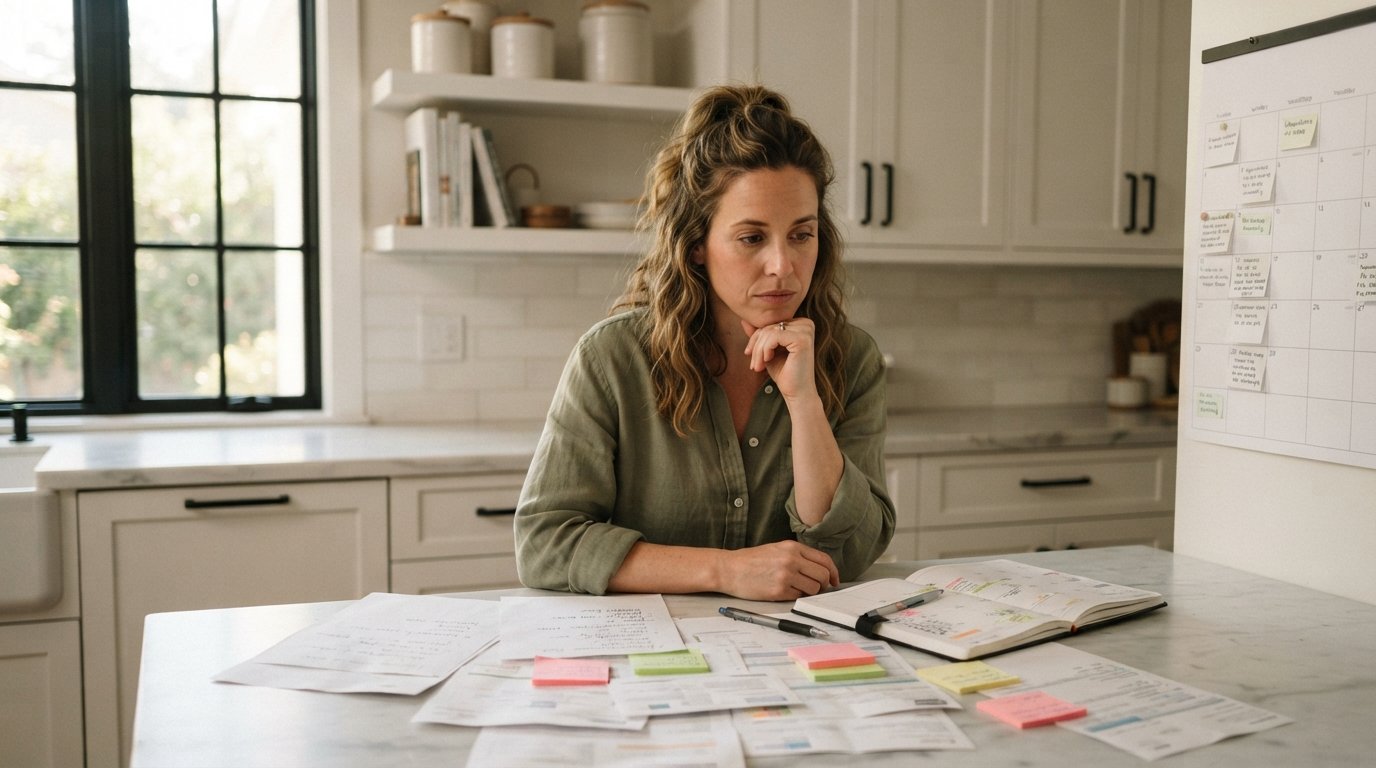
Paper clutter can be especially frustrating because it tends to move around the house.
Bills, school papers, receipts, appointment reminders, and documents may begin in the kitchen and eventually spread to counters, drawers, and desks.
Instead of trying to organize every piece of paper immediately, create one designated landing spot.
It could be:
- a wall-mounted file holder;
- a small desktop organizer;
- a dedicated drawer;
- a labeled document box.
Then create a simple routine for processing the contents.
Some papers need action. Some need filing. Others can be recycled or shredded.
The important thing is to stop paperwork from becoming a collection of temporary piles throughout the home.
10. Make Small Closets Easier to See
A small closet becomes much harder to use when everything is packed tightly together.
Instead of simply adding more hangers, make the existing space easier to see.
Group clothing by category, such as:
- everyday tops;
- dresses;
- jackets;
- work clothes;
- seasonal pieces.
You can also use shelf dividers or appropriately sized bins for accessories and folded items.
If you have clothing that you rarely wear because it belongs to another season, consider moving those pieces to a separate storage area when practical.
The goal is not to create a picture-perfect closet.
It is to make it obvious what you own so you can actually use it.
11. Create a Home for Items That Are Always “In Between”
Every home has objects that seem to have no permanent place.
A jacket that is not dirty enough for the laundry but not clean enough to put away.
A bag that you use several times a week.
A charging cable that moves from room to room.
A pair of shoes that gets worn constantly.
These objects are often responsible for more visible clutter than rarely used belongings.
Instead of repeatedly telling yourself to put them away, create a practical temporary home.
A few hooks, a small basket, a charging station, or a designated shelf can make a surprisingly large difference.
This is one of the most important principles of sustainable organization:
A good system should accommodate real life instead of fighting it.
12. Store Similar Things Together
When similar items are scattered throughout the house, you may end up buying duplicates simply because you cannot find what you already own.
Create broad categories and keep related things together.
For example:
- batteries and small electronics;
- gift-wrapping supplies;
- cleaning supplies;
- light bulbs;
- craft materials;
- seasonal decorations;
- extra linens.
You do not need dozens of tiny categories.
The goal is simply to make it easier to answer the question, “Where would I look for this?”
If the answer is obvious, your system is working.
How to Make a Small Home Feel More Spacious
Organization can improve the way a home functions, but there are also visual choices that can make a room feel less crowded.
Keep Some Empty Space
Not every shelf needs to be full.
Leaving a little breathing room between furniture and decor can make a room feel calmer and more intentional.
This is particularly useful in small living rooms and bedrooms where too many objects can compete for attention.
Choose Storage That Blends In
Storage does not always need to be the visual focal point of a room.
When possible, choose baskets, boxes, cabinets, and furniture that complement your existing colors and materials.
A consistent palette can help storage feel like part of the room rather than a collection of unrelated containers.
Avoid Organizing Every Item Into a Separate Container
More containers do not automatically mean better organization.
If you have a drawer full of small items, one appropriately sized organizer may help. Ten tiny containers may make the drawer harder to use.
Before buying anything, ask:
What problem is this container solving?
If you cannot answer that question, you may not need it.
The Difference Between Decluttering and Organizing
These two tasks are related, but they are not the same.
Decluttering means deciding what you no longer need, use, or want to keep.
Organizing means creating a logical place and system for the things you decide to keep.
Trying to organize possessions you do not actually need can make the process more expensive and complicated.
That is why a simple sequence works well:
Reduce → Group → Assign a home → Maintain
Start by reducing unnecessary items. Then group similar things. Give each category a practical home. Finally, create a small habit that keeps the system working.
Small Home Organization Ideas for Renters
Renting does not mean you have to live with constant clutter.
You can still use many space-saving strategies without making permanent changes.
Consider:
- removable hooks where appropriate;
- over-the-door storage;
- freestanding shelves;
- rolling carts;
- furniture with built-in storage;
- tension-based organizers where suitable;
- baskets and bins;
- narrow bookcases.
Always check your lease and the manufacturer’s instructions before installing anything or attaching storage to walls, doors, or cabinets.
For renters, portability is another useful consideration. If a storage solution can move with you, it may provide more long-term value than a custom solution designed for one specific space.
Keep Organization Easy Enough to Maintain
The most beautiful organization system is not necessarily the best one.
If returning an item to its proper place takes several steps, people are less likely to do it consistently.
Think about what happens when you are tired.
Where would you naturally put the item?
Can your storage system make that location useful instead of forcing you to create a new habit from scratch?
This is where many organization projects fail. They are designed for an ideal version of everyday life rather than the way people actually live.
Good organizing systems often work better when they adapt to existing habits instead of pursuing a perfectly styled home.
Your home does not need to stay perfectly organized every minute.
It needs systems that make resetting the space easier.
Organization Can Also Make Cleaning Easier
There is another practical reason to reduce clutter: fewer objects on surfaces can make routine cleaning simpler.
The U.S. Environmental Protection Agency recommends reducing clutter, wiping dust with a damp cloth, and vacuuming as part of steps that can help reduce indoor dust and other pollutants.
That does not mean an organized home is automatically healthier, nor does organization replace appropriate cleaning or ventilation.
It simply means that when surfaces and floors are easier to access, basic maintenance can become less frustrating.
This is especially useful in a small home, where a little clutter can quickly make an entire room feel difficult to clean.
For additional information about indoor air quality and practical home-maintenance steps, see the U.S. Environmental Protection Agency’s guide to improving your indoor environment.
A Simple Weekend Reset for a Small Home
You do not need an entire weekend to reorganize your house.
Instead, choose three areas that create the most daily frustration.
For example:
Friday: Clear one surface or drop zone.
Saturday: Organize one drawer, closet section, or cabinet.
Sunday: Create a home for the items that repeatedly end up out of place.
Keep the sessions short enough that you can finish them.
Once each area has a system, spend a few minutes returning things to their proper places at the end of the day.
Small maintenance habits are usually easier to sustain than occasional marathon organizing sessions.
Small Home Organization Ideas That Create More Breathing Room
A smaller home does not have to feel cramped, and creating more space does not always require buying more storage.
Sometimes the biggest improvement comes from removing what you no longer need, moving storage upward, giving everyday objects a practical home, and choosing furniture that works harder.
The best small home organization ideas are the ones that make your actual life easier.
You should be able to find the things you use, put them away without a complicated process, and move through your rooms without constantly working around clutter.
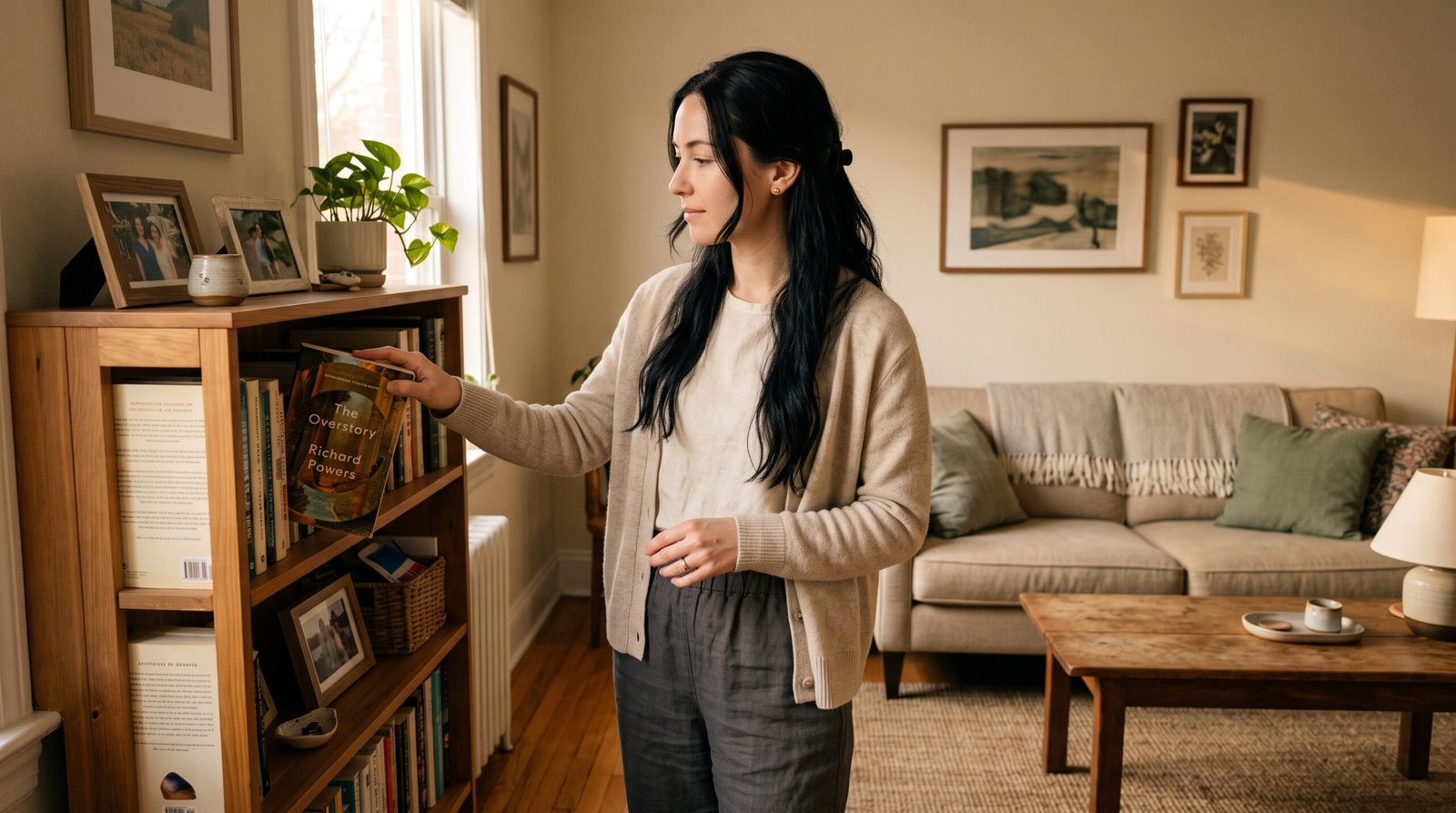
And organization does not have to make your home feel sterile. Leave room for the things that give your home personality—favorite books, meaningful photographs, artwork, cozy textiles, and the little details that make the space yours.
If you are also looking for affordable ways to refresh a room, you may enjoy Easy DIY Home Decor: 10 Beautiful DIY Projects.
A well-organized home is not necessarily the one with the most storage containers or the fewest possessions.
It is the home where the space supports the way you actually live.
Post Comment