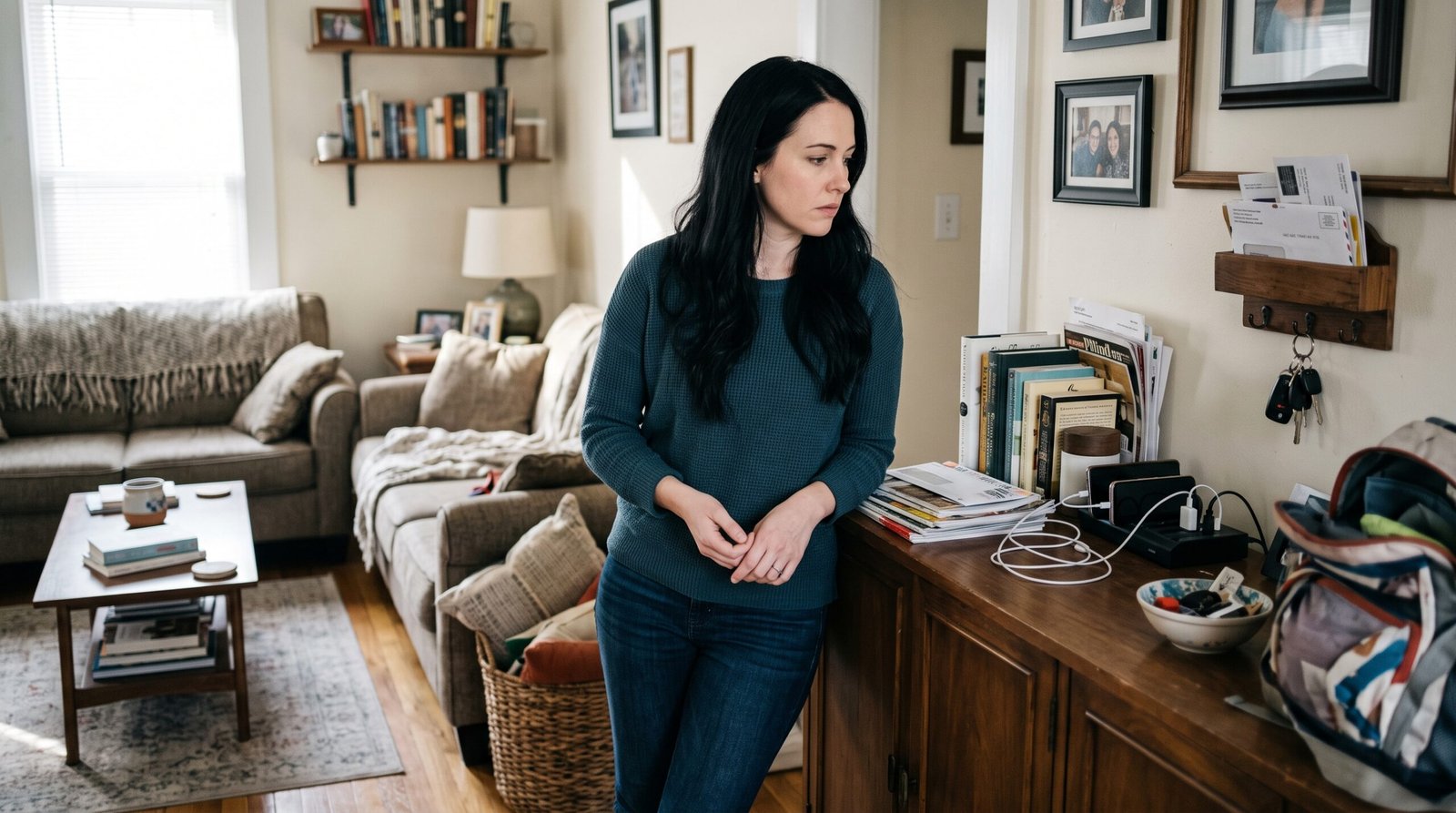
A cluttered home can make everyday life feel more complicated than it needs to be. When countertops fill up, closets become difficult to close, and drawers are packed with things you rarely use, even simple routines can begin to feel frustrating.
The hardest part is that decluttering is rarely just about throwing things away. Some belongings are connected to memories. Others were expensive, gifts from people you care about, or items you kept because you thought you might need them someday.
That can make the idea of decluttering your home feel overwhelming before you even begin.
But you do not have to empty your entire house, become a minimalist, or spend an entire weekend making difficult decisions.
A more practical approach is to work gradually, focus on the spaces that affect your daily life, and become more intentional about what deserves the limited space inside your home.
If your home feels crowded but you are not sure where to start, these 10 simple steps can help you reduce clutter without turning the process into an exhausting project.
Decluttering your home becomes much easier when you focus on one small area at a time instead of trying to change the entire house at once.
10 Simple Decluttering Steps That Actually Help
Before you begin, it helps to understand what decluttering really means.
Cleaning removes dirt. Organizing gives your belongings designated places. Decluttering is the process of deciding which belongings still deserve space in your home.
That distinction matters.
If you organize things you no longer need, you may simply create a more attractive version of the same clutter.
The goal is not to make your home look empty. It is to make the space work better for the life you actually live.
1. Start With One Small Area
One of the easiest ways to become overwhelmed is to begin with the entire house.
You might pull clothes from your closet, empty several kitchen drawers, collect paperwork from different rooms, and suddenly find yourself surrounded by more belongings than you can realistically sort.
Instead, choose one small area.
It could be:
- one drawer;
- one shelf;
- one bathroom cabinet;
- one section of a closet;
- one nightstand;
- one entryway surface.
Give yourself a limited amount of time, such as 20 or 30 minutes, and work only in that space.
A small finished area is more useful than a large unfinished project.
It also gives you an opportunity to practice making decisions before moving into categories that may be more emotionally difficult.
If you do not know where to begin, choose the area that creates the most everyday frustration.
2. Ask Whether You Actually Use the Item
One of the most difficult questions during decluttering is:
“What if I need this someday?”
That question can make it almost impossible to let anything go.
Instead, ask a few more practical questions:
- When did I last use this?
- Do I expect to use it again?
- Do I own something else that does the same job?
- Would I buy this again today?
- Is keeping it worth the space it occupies?
You do not need to get rid of everything you have not used recently.
Seasonal clothing, emergency supplies, special-occasion items, and sentimental belongings may have a legitimate reason to stay.
The purpose of these questions is simply to separate genuine usefulness from the vague possibility that something might become useful someday.
This can be particularly helpful with kitchen gadgets, clothing, hobby supplies, duplicate household items, and miscellaneous objects stored “just in case.”
3. Use a Simple Sorting System
Decluttering becomes easier when every item has a clear decision to make.
You do not need a complicated system with dozens of categories.
Start with four:
Keep: Things you use, need, or genuinely value.
Donate: Useful items you no longer want that could benefit someone else.
Discard: Broken, damaged, expired, or otherwise unusable items that no longer belong in your home.
Relocate: Things you want to keep but that belong somewhere else.
For particularly difficult belongings, you can create a temporary “decide later” box.
Use this category sparingly, though.
If most of your belongings end up there, you have simply postponed the same decision.
For genuinely uncertain items, give yourself a specific date to revisit the box. Having a defined review point can make the decision easier than leaving the question open indefinitely.
4. Make the Easy Decisions First
Not every belonging deserves a long emotional discussion.
Some decisions are obvious.
Start with things such as:
- expired products;
- empty containers;
- broken objects you realistically will not repair;
- duplicate items you never use;
- outdated paperwork;
- clothing that is no longer wearable;
- things you already know you do not want.
These easy decisions create momentum.
They also reduce the number of belongings you need to evaluate when you reach more complicated categories.
You do not have to start with family photographs, childhood possessions, or sentimental gifts.
Sometimes the best way to make progress is to remove the things you already know no longer serve a purpose.
5. Be Careful With “Just in Case” Items
“Just in case” is one of the easiest ways for clutter to accumulate.
An old appliance might stay because you could need it someday.
Several outfits may remain in the closet because you might wear them for an unknown future occasion.
A drawer full of miscellaneous cables may seem worth keeping because one of them could eventually become useful.
Sometimes keeping something for future use makes perfect sense.
The problem occurs when “just in case” becomes the automatic answer.
When evaluating these items, think about how likely you are to need them and how difficult they would be to replace if that day actually comes.
You do not have to eliminate every backup item.
Instead, try to distinguish between reasonable preparedness and accumulated uncertainty.
If you have several versions of the same item simply because you are afraid you might need one eventually, that may be a sign that your home is storing possibilities rather than supporting your current life.
6. Give Sentimental Items More Time
Sentimental belongings can be among the hardest things to declutter.
Old photographs, letters, childhood objects, family belongings, handmade gifts, and souvenirs may carry meaning that has nothing to do with their practical usefulness.
Do not force yourself to make these decisions quickly.
It is perfectly reasonable to complete easier categories first and return to sentimental belongings later.
When you do, ask:
What does this item represent to me?
Sometimes the memory is more important than the object itself.
Other times, the physical item genuinely matters and deserves to stay.
You do not need to create a minimalist home by removing everything connected to your past.
A home can be filled with meaningful memories without feeling overwhelmed by possessions.
If you have several objects representing the same memory, consider whether one meaningful item could preserve that connection while allowing you to let go of the rest.
And if an item is genuinely irreplaceable and deeply meaningful, keeping it can be the right decision.
Decluttering is about intentional choices, not getting rid of everything possible.
7. Stop Keeping Things Out of Guilt
Guilt can quietly become one of the biggest sources of clutter.
You may keep a gift because you do not want to appear ungrateful.
You may hold onto an expensive purchase because getting rid of it feels like admitting you made a mistake.
But keeping something you do not use does not change the original decision.
You can appreciate the person who gave you a gift without keeping the physical object forever.
Likewise, an expensive item does not become more valuable simply because it continues occupying space in your home.
Try separating the money, emotion, or intention behind an item from the question of whether it belongs in your life today.
Decluttering is not about criticizing your past choices.
It is about deciding what makes sense for your home now.
8. Look for Duplicates
Duplicates are easy to overlook because each individual item may seem harmless.
One extra water bottle does not feel like much.
Neither does another serving bowl, pair of scissors, reusable bag, or charging cable.
But small amounts of duplication can eventually consume a surprising amount of storage space.
Group similar belongings together and look at the category as a whole.
You may find duplicates among:
- kitchen utensils;
- cleaning products;
- reusable bags;
- office supplies;
- beauty products;
- towels and linens;
- tools;
- cables and electronics accessories;
- travel items.
This does not mean you should own only one of everything.
A household may reasonably need multiple towels, plates, tools, or other everyday items.
The important question is whether the number you own matches how you actually use your home.
Sometimes seeing everything together is enough to make the decision obvious.
9. Create an Exit Plan for Unwanted Items
One of the most overlooked parts of decluttering is what happens after you decide something can leave.
A donation bag sitting in the hallway for several weeks is still contributing to visual clutter.
Once you decide an item is leaving, give it a clear next step.
You might:
- keep a donation bag in an accessible place;
- schedule a regular donation drop-off;
- recycle appropriate materials;
- dispose of unusable items responsibly;
- return borrowed belongings;
- sell selected higher-value items.
Be realistic about selling.
It can be tempting to list every unwanted possession online because you might recover some money.
But if photographing, listing, storing, negotiating, and meeting buyers takes weeks, the items may continue occupying valuable space.
For many ordinary household belongings, a straightforward donation or responsible disposal plan may be more practical.
The important thing is to create an actual exit route.
Decluttering is not finished when something leaves a drawer.
It is finished when the item has genuinely left the space you are trying to reclaim.
10. Build a Small Habit to Keep Clutter From Returning
Decluttering your home becomes much more effective when the results are easy to maintain.
After clearing a space, pay attention to what begins accumulating there again.
Does mail return to the kitchen counter?
Do shoes collect near the door?
Do clothes remain on the same chair?
Do unused purchases keep entering the house?
These patterns can tell you something important.
The problem may not simply be that you have too many things. Your home may also need a more convenient system.
Try a few simple habits:
- process mail regularly;
- return frequently used items after use;
- keep a donation bag available;
- pause before bringing unnecessary purchases home;
- review high-clutter areas periodically.
The goal is not to spend your life organizing.
It is to make clutter less likely to build up again.
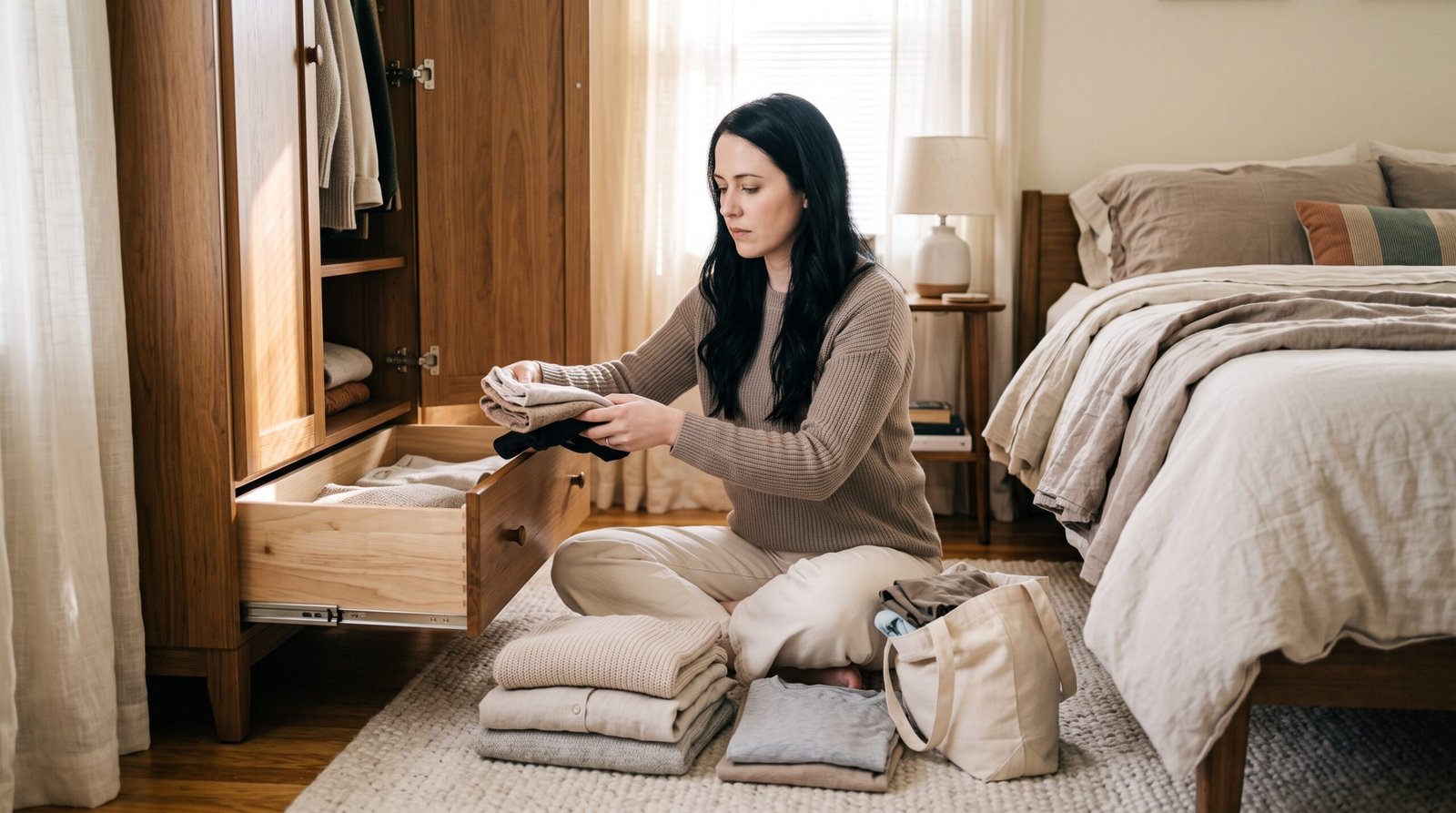
What Should You Declutter First?
If the thought of decluttering your entire home still feels overwhelming, start with categories that tend to contain obvious clutter.
Expired and Unusable Items
Expired food, dried-out products, broken containers, and items that are no longer usable can often be evaluated quickly.
For medications and other products that require special disposal, follow appropriate local or manufacturer guidance rather than simply placing everything in household trash.
The point is to begin with items that have little practical or emotional reason to remain.
Duplicate Household Items
Gather similar belongings together before deciding what to keep.
You may be surprised by how many duplicates have accumulated simply because different items were stored in different rooms.
Clothing You Never Wear
Instead of asking whether a piece of clothing technically fits, consider whether you actually enjoy wearing it.
Think about your current lifestyle, not the life you imagine you might have someday.
A closet should support the person you are now.
Paper Clutter
Receipts, outdated instructions, old notes, duplicate documents, and papers that no longer serve a purpose can quickly fill drawers and countertops.
Be especially careful with documents containing financial or personal information and dispose of them securely when appropriate.
Things That Already Have a Better Home
Not every clutter problem means you own too much.
Sometimes an item simply does not have a convenient place to go.
If something repeatedly ends up on the kitchen counter, dining table, or floor, ask whether its current storage location is practical.
That may be an organization problem rather than a decluttering problem.
How to Declutter Without Becoming a Minimalist
Decluttering does not require turning your home into a minimalist space.
The goal of decluttering your home is not to own as little as possible, but to create a space that supports the way you actually live.
You can own books, decorations, collections, photographs, craft supplies, seasonal belongings, hobbies, and objects that simply make you happy.
There is no universal number of possessions that defines an organized or successful home.
Instead, consider whether the things around you support the life you actually live.
A home can be full of personality without feeling overwhelmed by clutter.
The difference often comes down to intentionality.
Useful things contribute to daily life.
Meaningful things contribute to the feeling of home.
Unwanted things that remain simply because you have never made a decision can gradually take over valuable space.
Decluttering gives you an opportunity to reconsider that balance.
Decluttering a Small Home
Decluttering can make an especially noticeable difference in a smaller home because there is less unused space to absorb excess belongings.
A few items left on a countertop can make an entire kitchen feel crowded.
A chair covered with clothing can make a bedroom feel smaller.
A full entryway can make coming home feel chaotic.
This is why reducing possessions can sometimes be more effective than adding storage.
If you are also looking for practical ways to organize the things you decide to keep, see our guide to Small Home Organization Ideas: 12 Simple Ways to Create More Space.
The two processes work best together:
Declutter first. Organize what remains second.
That sequence can prevent you from spending money and effort creating elaborate storage systems for belongings you ultimately do not need.
A Simple 7-Day Decluttering Reset
If the idea of decluttering your entire house feels too large, break it into seven small sessions.
Day 1: Entryway
Clear the area where you enter and leave your home.
Remove obvious trash, relocate belongings, and identify anything that repeatedly ends up there without a designated place.
Day 2: Kitchen
Choose one drawer, cabinet, shelf, or section of countertop.
Do not attempt to reorganize the entire kitchen.
Day 3: Bathroom
Check expired products, duplicates, and items you no longer use.
Keep the focus narrow enough that you can finish.
Day 4: Bedroom
Choose one drawer, clothing category, nightstand, or visible surface.
If clothing is the problem, start with the pieces you already know you never wear.
Day 5: Paperwork
Gather loose papers and decide what requires action, filing, recycling, or secure disposal.
Do not let paperwork spread into multiple new piles while you work.
Day 6: Living Room
Look at surfaces, shelves, baskets, and corners where belongings tend to accumulate.
Remove items that clearly belong somewhere else.
Day 7: Exit Day
Take the items you have decided to remove out of the house.
Donate them, recycle appropriate materials, dispose of unusable belongings responsibly, or complete the next step for items you are selling.
This final day matters.
The process is not complete simply because an item moved from your closet into a donation bag.
Creating a clear exit route is what turns a decluttering decision into actual additional space.
How to Know When You Are Done
Decluttering does not have a perfect finish line.
There will always be another drawer you could improve or another category you could reconsider.
Instead of asking whether your entire house is completely clutter-free, ask whether your home is becoming easier to live in.
Can you find what you need?
Can you put things away without fighting for storage space?
Are the surfaces easier to use?
Can you clean without first moving piles of belongings?
Do the things you own reflect your current life?
If the answer to these questions is increasingly yes, you are making meaningful progress.
Your goal does not need to be a picture-perfect home.
It can simply be a home that feels lighter, more functional, and easier to live in.
Decluttering Your Home Can Create More Than Physical Space
Decluttering is often described as a way to create more room, but the result can go beyond empty shelves and clearer countertops.
When fewer unnecessary objects compete for your attention, everyday tasks can become easier to manage.
You may spend less time searching for things, have fewer surfaces to clear, and find it easier to maintain the rooms you use most.
More importantly, decluttering gives you an opportunity to decide what deserves space in your home now.
Decluttering your home can also change how you experience your everyday routines.

You do not have to become a minimalist.
You do not have to remove everything that is not currently useful.
And you certainly do not have to organize your entire house in one weekend.
Start with one small area. Make a few honest decisions. Give the things you keep a practical place. Then create simple habits that make it easier to maintain the space you have created.
A home does not need to contain less simply for the sake of having less.
It needs enough space for the people, activities, memories, and everyday routines that matter most.
Post Comment