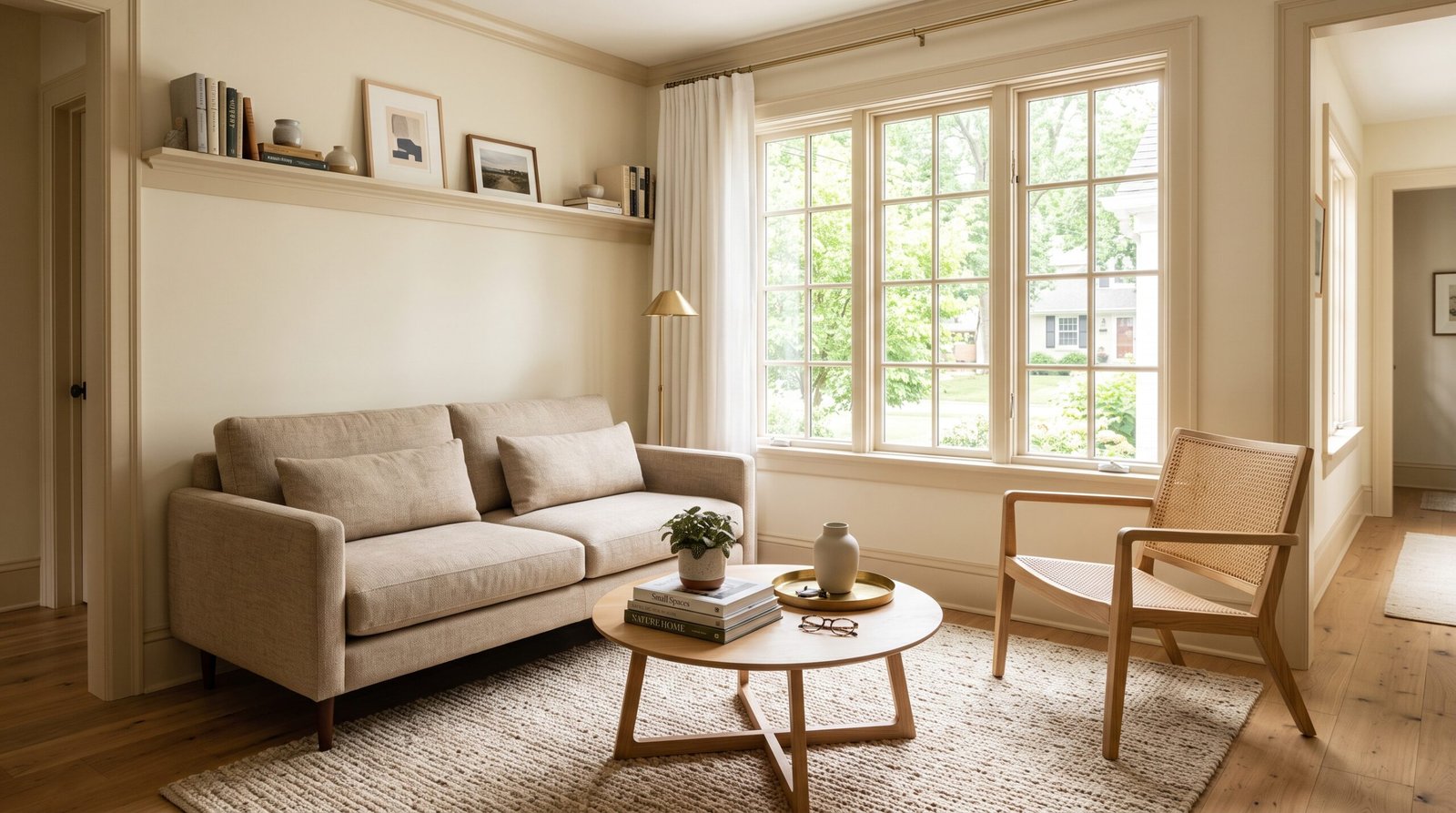
How to make a small living room look bigger starts with understanding how furniture placement, lighting, and visual balance affect the way you experience the space.
You do not necessarily need to remove half your furniture or spend money on a complete makeover. Sometimes a room feels smaller than it really is because furniture blocks the walking path, too many objects compete for attention, or the lighting makes the walls feel closed in.
The goal is not to make a small living room look empty. It is to make the space feel easier to move through and easier to enjoy.
With a few thoughtful changes, you can create more visual breathing room while keeping the furniture and belongings that make the room feel like home.
Here are 10 practical ways to make a small living room look bigger without turning it into a cold or overly minimalist space.
10 Ways to Make a Small Living Room Look Bigger
A small living room works best when every major element has a purpose. Instead of trying to fill the room, focus on creating clear sightlines, comfortable circulation, and a balanced arrangement.
1. Give Your Furniture Room to Breathe
One of the easiest ways to make a small living room look bigger is to avoid pushing too many pieces into the same area.
Start by looking at the space around your sofa, chairs, and tables. Can you walk between them comfortably? Is a side table creating a tight corner? Does a chair block the natural path through the room?
You may not need to remove furniture. Try moving pieces slightly apart or changing their angles.
Even a few inches can make a room feel less crowded.
Keep the main walking path as clear as possible. When the floor is easier to see and move across, the entire room can feel more open.
2. Choose a Focal Point Instead of Filling Every Wall
A small living room does not need something interesting on every wall.
Too many competing decorations can make the room feel visually busy, which can make it seem smaller.
Instead, choose one main focal point. It might be a piece of artwork, a fireplace, a television wall, a favorite collection, or even a large window.
Arrange the furniture so the eye naturally understands where to look.
The room can still have personality without requiring every available surface to be decorated.
3. Use Mirrors Where They Can Reflect Light or Space
Mirrors can help a small living room feel more open when they are placed thoughtfully.
Instead of adding a mirror simply because it is a common small-space decorating trick, look at what it will reflect.
A mirror opposite or near a window can help bounce natural light around the room. One that reflects an attractive part of the space can also create a greater sense of depth.
Avoid placing mirrors where they reflect clutter or a crowded corner.
The goal is not to make the room look like it has twice as much furniture. It is to create a lighter, deeper visual impression.
4. Keep the Floor as Visible as Possible
Visible floor space can make a small living room feel larger.
That does not mean removing your rug or choosing furniture with no character. It simply means avoiding unnecessary pieces that interrupt the floor around the main seating area.
A compact side table may be enough instead of several small tables. Furniture with visible legs can also allow more of the floor to show underneath.
Look at the room from the doorway. If you can see a clear path and portions of the floor around the furniture, the space will generally feel less crowded.
5. Use Curtains to Emphasize Height
Windows are valuable visual openings in a small room, so avoid making them feel unnecessarily small.
If your curtains allow it, hang the rod higher than the top of the window and let the fabric fall toward the floor. This can draw the eye upward and emphasize the height of the room.
Natural light can also make a room feel brighter and more open, and the U.S. Department of Energy explains how thoughtful window design and daylighting can help bring more natural light into a home.
Choose curtains that do not overwhelm the window with heavy layers or excessive fullness.
When possible, keep the area directly in front of the window relatively open. Natural light and an unobstructed window can contribute to a stronger feeling of spaciousness.
6. Let Natural Light Do More Work
Good lighting can change the way a small living room feels throughout the day.
During daylight hours, open curtains and blinds whenever practical. Clean windows can also help more natural light enter the room.
At night, avoid relying on one harsh overhead light if you have other options. Use the lamps you already own to create softer layers of light around the room.
Place light where it helps define useful areas, such as beside a reading chair or near the sofa.
A room does not need to be brightly illuminated from every direction. Balanced lighting can make the space feel comfortable without creating a flat, closed-in atmosphere.
7. Choose Furniture That Fits the Room
Oversized furniture can quickly make a small living room feel cramped.
Before adding another piece, consider the actual proportions of the room.
A large sectional may be comfortable, but if it leaves almost no walking space, the room can become difficult to use. Likewise, a very deep coffee table may dominate a compact seating area.
If you already own larger furniture, do not assume you need to replace it. Try repositioning the piece first.
For future purchases, measure the available space before bringing anything home. A smaller sofa or visually lighter chair can sometimes provide more comfort because it leaves enough room to move.
8. Keep Surfaces Selectively Decorated
Small rooms benefit from visual breathing room.
Coffee tables, shelves, consoles, and side tables do not need to display everything you own.
Choose a few meaningful or useful objects and put the rest away.
For example, a coffee table might need only a book and one decorative object. A shelf can hold a small group of books and a framed photograph rather than dozens of unrelated items.
This does not mean your living room has to become minimalist.
It simply creates a clearer visual hierarchy, allowing the objects you love to stand out instead of competing with one another.
9. Use One Consistent Color Direction
A room can feel more cohesive when its major colors work together.
You do not need to repaint the entire living room. Start with what is already there.
If your sofa, curtains, rug, and accessories have several unrelated colors, look for one or two shades that can visually connect them.
Neutral colors can create a calm backdrop, while muted accent colors can add personality without overwhelming the room.
The goal is not to remove color. It is to reduce visual fragmentation.
When the eye can move more easily from one part of the room to another, the space can feel more unified and spacious.
10. Remove What the Room Does Not Need
Sometimes the most effective way to make a small living room look bigger is simply to remove something.
Look for furniture that rarely gets used, decorations that no longer feel meaningful, duplicate storage pieces, or objects that have gradually collected on open surfaces.
Do not start by trying to declutter the entire house.
Choose the living room and ask a simple question about each item: Does this help the room function, or does it only take up space?
If something is useful but currently in the wrong place, move it. If it is no longer useful, consider whether it needs to remain in the room.
A little editing can create more breathing room without changing the character of your home.
How to Arrange Furniture in a Small Living Room
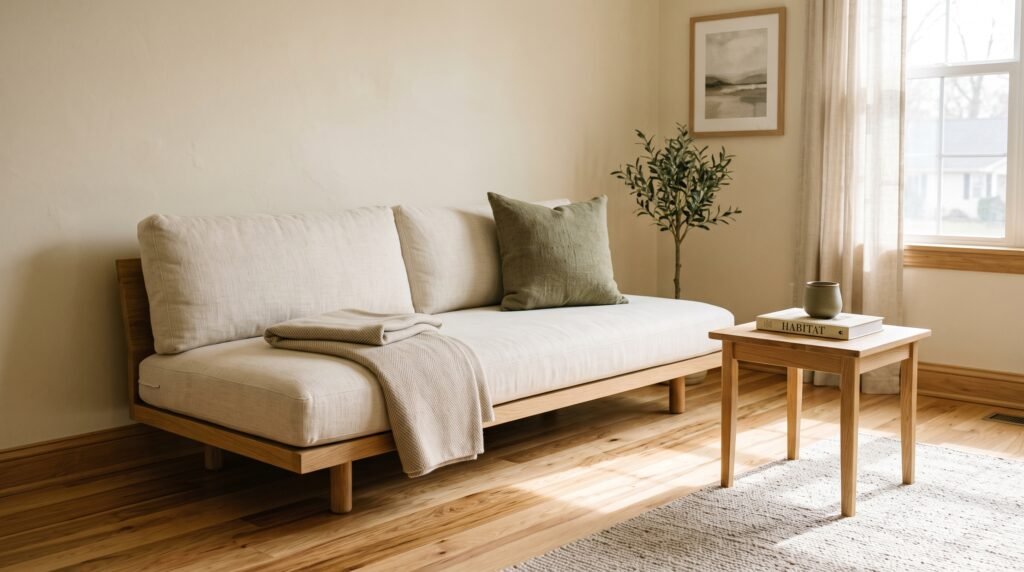
When arranging a small living room, start with the largest piece, usually the sofa.
Place it where it supports the room’s main function without blocking the most important walking path. Then add chairs or other seating based on how people actually use the space.
Avoid creating narrow passages between too many pieces of furniture. You want people to be able to enter, sit, stand, and move through the room without constantly navigating around obstacles.
A helpful approach is to leave the center of the main walking area as open as possible.
If the room serves several purposes, such as watching television, reading, and talking, use furniture placement to create subtle zones rather than dividing the room with bulky pieces.
How to Make a Small Living Room Look Bigger Without Buying New Furniture
You can often improve the proportions of a small living room without purchasing anything.
Start by shopping your own home.
Move a small table to another room if it is taking up valuable floor space. Try a chair in a different corner. Remove one piece of furniture and live with the room for a few days before deciding whether you actually miss it.
You can also rearrange books, artwork, blankets, and personal objects so that the room feels more intentional.
Before buying a smaller sofa, new shelves, or storage furniture, see what can be improved with the pieces you already own.
Small Living Room Mistakes That Can Make the Space Feel Smaller
Some decorating choices can unintentionally make a small living room feel more crowded.
Too much furniture is an obvious example, but there are subtler issues too.
Blocking windows can reduce natural light. Covering every surface can create visual noise. Using several unrelated furniture styles can make the room feel fragmented. Keeping rarely used objects in the main living area can also take up valuable space.
Another common mistake is trying to copy a large living room layout in a much smaller space.
A small room needs its own proportions.
Instead of asking what would look impressive in a larger house, ask what makes sense for the way you actually use your living room.
How to Make a Small Living Room Feel Cozy and Spacious
Learning how to make a small living room look bigger does not mean making the space feel empty.
You can keep soft textiles, books, photographs, artwork, and personal belongings while still creating breathing room.
The key is balance.
Give important furniture enough space around it. Keep the main walking path clear. Let natural light reach the room. Remove objects that no longer serve a purpose.
If your living room also feels cluttered, our guide to Small Home Organization Ideas: 12 Simple Ways to Create More Space offers additional ideas for making a smaller home easier to use.
You may also find that decluttering helps before you begin rearranging. Removing unnecessary items makes it easier to see what the room actually needs.
A Simple Weekend Reset for a Small Living Room
You do not need an entire weekend to redesign your living room.
Start with 15 minutes.
Clear the main surfaces. Remove items that belong in other rooms. Look at the walking path from the doorway. Move one piece of furniture if the arrangement feels tight.
Then open the curtains and let in natural light.
Sit in the room for a few minutes and pay attention to how it feels.
Does the sofa face the right direction? Is there somewhere comfortable to place a book? Is anything blocking the window? Does the room feel easier to move through?
Make one or two additional changes based on what you notice.
This small reset can be more useful than buying several new decorating pieces.
A Bigger-Feeling Living Room Starts With Better Use of Space
Making a small living room look bigger is not really about making the room appear enormous.
It is about helping the space feel easier to move through, easier to look at, and more comfortable to live in.
Start with the furniture. Clear the walking paths. Let natural light in. Use mirrors thoughtfully. Keep surfaces from becoming overloaded. Remove items that no longer need to be there.
Most importantly, do not feel pressured to turn your home into a minimalist showroom.
A small living room can still hold books, photographs, blankets, artwork, family belongings, and the everyday details that make it personal.
When you use the space intentionally, even a modest living room can feel open, comfortable, and welcoming.
Post Comment